
+86 18116360585
- English
- Chinese
- French
- German
- Portuguese
- Spanish
- Russian
- Japanese
- Korean
- Arabic
- Irish
- Greek
- Turkish
- Italian
- Danish
- Romanian
- Indonesian
- Czech
- Afrikaans
- Swedish
- Polish
- Catalan
- Esperanto
- Hindi
- Lao
- Albanian
- Amharic
- Armenian
- Azerbaijani
- Belarusian
- Bengali
- Bosnian
- Bulgarian
- Cebuano
- Chichewa
- Corsican
- Croatian
- Dutch
- Estonian
- Filipino
- Finnish
- Frisian
- Galician
- Georgian
- Gujarati
- Haitian
- Hausa
- Hawaiian
- Hebrew
- Hmong
- Hungarian
- Icelandic
- Igbo
- Javanese
- Kannada
- Kazakh
- Khmer
- Kurdish
- Kyrgyz
- Latin
- Latvian
- Lithuanian
- Luxembou..
- Macedonian
- Malagasy
- Malay
- Malayalam
- Maltese
- Maori
- Marathi
- Mongolian
- Burmese
- Nepali
- Norwegian
- Pashto
- Persian
- Punjabi
- Serbian
- Sesotho
- Sinhala
- Slovak
- Slovenian
- Somali
- Samoan
- Scots Gaelic
- Shona
- Sindhi
- Sundanese
- Swahili
- Tajik
- Tamil
- Telugu
- Thai
- Ukrainian
- Urdu
- Uzbek
- Vietnamese
- Welsh
- Xhosa
- Yiddish
- Yoruba
- Zulu
- Kinyarwanda
- Tatar
- Oriya
- Turkmen
- Uyghur


Industrial buyers should choose a digital torque wrench around the actual tightening window—not simply the highest torque shown in a catalog. Define the minimum, normal, and maximum joint torque; keep routine work comfortably inside the wrench’s stated operating range; then confirm drive size, head format, tightening direction, accuracy statement, calibration documentation, and production workflow.
Digital Torque Wrench Selection at a Glance
| RFQ input | Why it changes the selection |
|---|---|
| Minimum, normal, and maximum torque | Determines whether one range covers the work reliably |
| Fastener sizes and access | Affects drive size, head geometry, and interchangeable-head needs |
| Tightening direction | Accuracy may be specified differently clockwise and counterclockwise |
| Joint standard or work instruction | Defines target torque and acceptance tolerance |
| Daily fastening volume | Influences ergonomics, battery planning, and data needs |
| Calibration requirement | Determines certificate, traceability, and recalibration expectations |
| Operator feedback | May call for display, buzzer, LED, or other alerts |
Start With the Joint Torque Window
A wrench is selected for joints, not for a bolt diameter in isolation. Coating, lubrication, prevailing-torque features, washer design, joint material, and the governing assembly procedure can all change the required torque.
Create a joint list with:
- target torque for every controlled joint;
- permitted upper and lower limits;
- clockwise or counterclockwise operation;
- fastener size and access restrictions;
- frequency of use.
The lowest routine target deserves special attention. A wrench whose headline maximum looks adequate may still be a poor choice if important joints sit near or below its specified lower limit. Ask the supplier for the exact model’s usable range and accuracy statement rather than extrapolating from another model.
Decide Whether One Range or Several Ranges Are Better
One wide-range tool can simplify inventory, but it is not automatically the best production choice. If the plant has two widely separated torque groups, two correctly sized wrenches may give operators a clearer process and keep both groups away from range extremes.
Compare the options using:
- percentage of joints covered within the stated range;
- how often operators must change sockets or heads;
- risk of selecting the wrong setting;
- calibration and spare-tool requirements;
- total cost across the tool’s working life.
This analysis also prevents buyers from paying for high capacity that the line never uses.
Match the Drive and Head to the Work
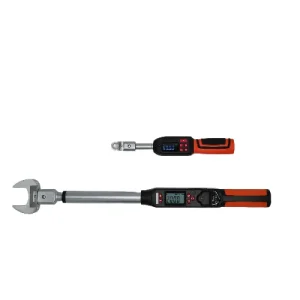
Drive size affects socket compatibility and the physical size of the wrench. Restricted access may require a compact ratchet head, open-end head, crowfoot, or interchangeable-head design.
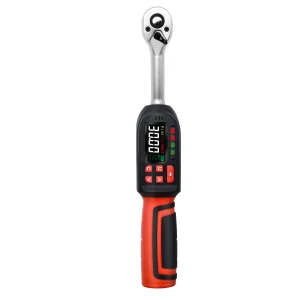
For applications that need different head styles, buyers can review an interchangeable-head digital torque wrench. For conventional socket work, a ratchet digital torque wrench may be more direct.
When using an extension or offset head, ask whether an effective-length correction is required. The answer should follow the tool manufacturer’s instructions and the plant’s torque procedure.
Read Accuracy Claims Precisely
“±2% accuracy” is not a complete purchasing specification by itself. Buyers should confirm:
- the range over which the statement applies;
- whether it applies clockwise, counterclockwise, or both;
- the reference standard and test conditions;
- whether the result is accuracy, repeatability, or both;
- the resolution of the display;
- what calibration document is supplied with the exact unit.
Calibration traceability, certificate content, recommended interval, and local service availability should be written into the RFQ when they matter. The appropriate recalibration interval depends on usage, handling, quality procedures, and governing requirements.
Specify Operator Feedback and Data Needs
Digital tools may use a display, audible warning, LED indication, vibration, or a combination. Select feedback that operators can recognize in the real working environment. A buzzer may be less useful on a noisy line unless it is paired with a visible indication.
Do not request torque-angle measurement, onboard record storage, wireless transfer, or software integration by default. State each needed function and require the supplier to confirm it for the proposed model. Also define:
- unit choices;
- preset requirements;
- data fields and export format;
- user access control;
- battery type and shift duration;
- environmental and drop-protection needs.
Build a Comparable Digital Torque Wrench RFQ
Send suppliers the same structured information:
- joint list with target torque and tolerance;
- minimum and maximum routine torque;
- tightening direction;
- fastener sizes and socket drive;
- access drawings or photos;
- preferred ratchet or interchangeable head;
- required feedback modes;
- data and connectivity requirements;
- required accuracy statement and calibration evidence;
- quantity, destination, and delivery schedule;
- spare, service, and recalibration expectations.
Ask for a model-by-model compliance table. This makes differences visible before price becomes the deciding factor.
Confirm the Purchase Configuration
The RFQ should list torque range, drive size, head type, unit display, alert method, data or communication requirement, calibration evidence, accessories, case, battery, and quantity. Ask the supplier to state sample availability, minimum order quantity, branding or packaging customization, applicable standards and requested certificates, recalibration and service support, production lead time, packing method, warranty, and destination. Price comparisons should normalize range, accuracy statement, calibration package, data functions, accessories, customization, quantity, and after-sales scope.
Frequently Asked Questions
Should the target torque sit at the center of the wrench range?
It does not have to be exactly centered. It should, however, remain within the manufacturer’s stated usable and accuracy-qualified range, with practical margin for the complete joint window.
Can one digital torque wrench cover every station?
Sometimes, but a very broad range may not suit low-torque joints, access constraints, or socket sizes. Compare one-tool and multi-tool plans against the actual joint list.
Is higher maximum torque always better?
No. Unused capacity can increase tool size and may place routine work near the lower end of the range.
What calibration information should a buyer request?
Request the certificate supplied, traceability basis, test points, direction covered, acceptance criteria, recommended interval, and available recalibration service.
What should distributors add to the RFQ?
Include target market, expected model mix, packaging, manuals, spare availability, branding needs, and forecast quantities.
Request a Range-Matched Recommendation
Review YOUBA torque wrench options and send the joint torque window, drive size, head requirement, accuracy documentation, and order quantity through the contact page. A complete joint list allows a supplier to recommend a range instead of guessing from maximum torque alone.
Previous News
When a Digital Torque Wrench Warning Is Not EnoughNext News
How Should Industrial Buyers Choose a Digital T...Feature Product
-
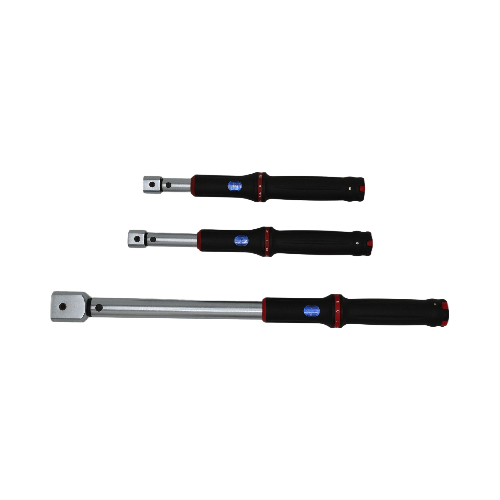 XS Series Interchangeable Head Window Style Cli...
TENGTUO ELECTRONIC TECHNOLOGY Item NO...
-
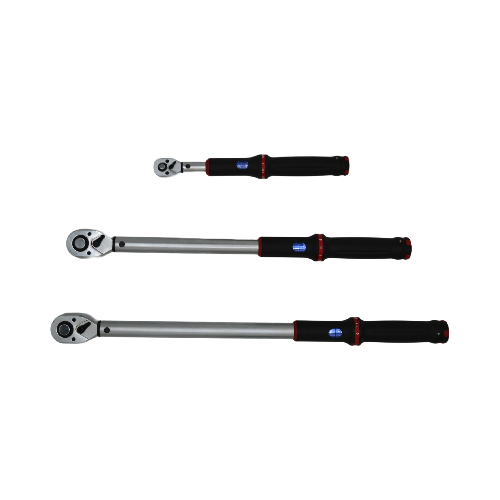 XS Series Window Style Click Torque Wrench
TENGTUO ELECTRONIC TECHNOLOGY Item NO...
-
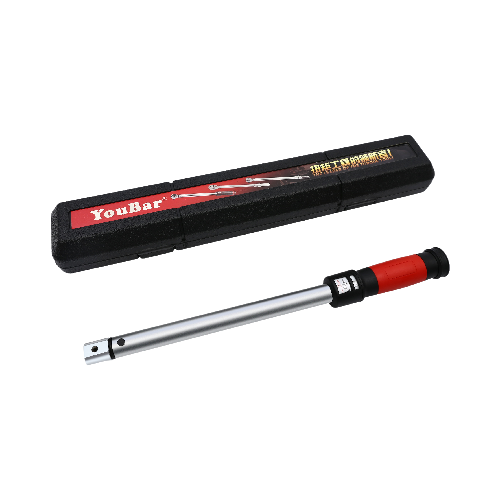 SL Series Interchangeable Head Window Style Cli...
TENGTUO ELECTRONIC TECHNOLOGY item NO...