
+86 18116360585
- English
- Chinese
- French
- German
- Portuguese
- Spanish
- Russian
- Japanese
- Korean
- Arabic
- Irish
- Greek
- Turkish
- Italian
- Danish
- Romanian
- Indonesian
- Czech
- Afrikaans
- Swedish
- Polish
- Catalan
- Esperanto
- Hindi
- Lao
- Albanian
- Amharic
- Armenian
- Azerbaijani
- Belarusian
- Bengali
- Bosnian
- Bulgarian
- Cebuano
- Chichewa
- Corsican
- Croatian
- Dutch
- Estonian
- Filipino
- Finnish
- Frisian
- Galician
- Georgian
- Gujarati
- Haitian
- Hausa
- Hawaiian
- Hebrew
- Hmong
- Hungarian
- Icelandic
- Igbo
- Javanese
- Kannada
- Kazakh
- Khmer
- Kurdish
- Kyrgyz
- Latin
- Latvian
- Lithuanian
- Luxembou..
- Macedonian
- Malagasy
- Malay
- Malayalam
- Maltese
- Maori
- Marathi
- Mongolian
- Burmese
- Nepali
- Norwegian
- Pashto
- Persian
- Punjabi
- Serbian
- Sesotho
- Sinhala
- Slovak
- Slovenian
- Somali
- Samoan
- Scots Gaelic
- Shona
- Sindhi
- Sundanese
- Swahili
- Tajik
- Tamil
- Telugu
- Thai
- Ukrainian
- Urdu
- Uzbek
- Vietnamese
- Welsh
- Xhosa
- Yiddish
- Yoruba
- Zulu
- Kinyarwanda
- Tatar
- Oriya
- Turkmen
- Uyghur


Searches such as 1 2 digital torque wrench snap on usually indicate that the buyer is already beyond basic product awareness and is comparing professional-grade 1/2-inch digital torque wrenches. At that stage, brand recognition alone is not enough to make a sourcing decision. The useful comparison is technical: drive/interface, real working torque range, stated accuracy and evidence, alert method, display and operating workflow, calibration requirements, data or memory needs, accessories and quotation scope. For industrial buyers and distributors, those variables determine whether two tools are actually comparable and whether the chosen wrench fits the intended assembly or maintenance work.
Move From Brand Search to Specification Comparison
A brand-led search is often the beginning of commercial investigation, not the end of it. A buyer may start by looking for a familiar professional product, then compare alternatives from manufacturers or OEM suppliers. The mistake is to compare only the brand name, maximum torque and headline accuracy.
A 1/2 in digital torque wrench should instead be evaluated against the actual job. The wrench has to connect to the required sockets, cover the normal torque window, fit the access space, provide operator feedback that works in the environment, and come with the evidence the buyer needs for quality control.
Youba positions its product range around industrial assembly and maintenance, with digital, mechanical and interchangeable-head torque tools. That makes specification-level comparison more useful than a retail-style brand review.
Start With the 1/2-Inch Drive—but Do Not Stop There
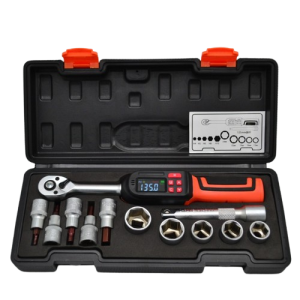
The 1/2-inch drive tells the buyer how the wrench connects to a socket or downstream interface. It is essential for compatibility, but it does not tell the buyer whether the wrench range is right for the joint or whether the head geometry works in the available space.
A 1/2 inch digital torque wrench may be used across many industrial and maintenance applications, but the drive size should be checked against the socket set, fastener dimensions and access conditions. If adapters, extensions or interchangeable heads are used, the complete tool chain should be reviewed rather than assuming the nominal drive size answers every compatibility question.
For buyers that need a 1/2-inch set rather than a single tool, Youba’s 12Pcs 1/2-Inch Drive Digital Torque Wrench Set provides a concrete product reference. Its current product naming confirms a ±2% accuracy claim plus buzzer and LED feedback. Those published details are useful comparison points, but they still need to be matched to the buyer’s working range and application.
Compare the Working Torque Window, Not Only Maximum Torque
Maximum torque is easy to compare, but it can hide a more important question: where does the application operate most of the time?
For a 1/2 inch torque wrench digital procurement project, the buyer should list the minimum, normal and maximum torque values of the joints that will actually be tightened. The selected range should cover those joints without forcing normal work to sit awkwardly at the edge of the tool’s usable window.
This becomes especially important for distributors building a product range. One high-capacity wrench may not replace a lower-range model if customers have substantially different fastening requirements. The correct range plan follows the joint portfolio, not the marketing headline.
Accuracy Claims Need Context and Evidence
Professional buyers often compare accuracy first, but a percentage without context is incomplete. The buyer should ask what range, direction and test condition the stated value applies to, and what calibration or verification document accompanies the product.
Youba’s current digital product pages include ±2% accuracy claims on specific models. That is relevant evidence for those products. The next procurement step is to define what the project needs to receive: a product certificate, calibration record, batch verification information or a sample check. The article should not assume a specific certificate or standard unless it is included in the product documentation.
This is one reason brand comparisons can be misleading. Two suppliers may publish similar accuracy numbers but provide different evidence packages or define the specification differently. The RFQ should normalize both the performance statement and the document requirement.
Does the Job Need Torque Only or Torque + Angle?
A digital torque wrench with angle is useful only when the assembly process includes an angular tightening stage. If the process ends at a torque value, angle capability may not add practical value. If the procedure requires an additional rotation after torque is reached, then the angle method becomes a genuine selection variable.
The buyer should therefore separate “digital” from “angle.” Digital display, electronic feedback and angle measurement are different functions. A tool can be digital without having an integrated angle function. For an electronic torque wrench with angle, angle capability should be confirmed on the exact model rather than inferred from a generic digital-wrench category.
This distinction keeps the comparison disciplined. Buyers can compare digital torque wrenches on torque range, accuracy evidence and feedback first, then add angle functionality only when the application requires it.
Operator Feedback Is a Workflow Feature, Not a Marketing Feature
Digital torque wrenches often use visual, audible or vibration alerts to help the operator approach and reach the target. The value of those alerts depends on the workstation.
In a quiet maintenance bay, an audible signal may be easy to notice. In a noisy production environment, a visual or vibration signal may matter more. With gloves, poor lighting or limited viewing angles, button layout and display readability can influence how consistently operators use the tool.
Youba’s digital products include buzzer and LED feedback on specified models. The buyer should evaluate those features in the context of the real station rather than simply counting how many alert modes are listed.
Memory and Data Functions Matter Only When the Process Uses Them
Data storage, presets and memory functions can add value in repetitive production or quality-control workflows, but they should not be treated as universally necessary. A maintenance technician performing occasional torque work may prioritize range, access and verification over data storage. A production line that needs repeated settings or traceability may value preset and record functions more highly.
The correct procurement question is therefore: what information must the operator or quality team retain after the tightening event? If no record is required, a more complex data function may not improve the process. If traceability is required, the buyer should define the exact record format and verify that the selected model supports it.
Ergonomics, Head Geometry and Access Can Change the Best Choice
Two digital wrenches with similar electronic specifications can behave very differently in a constrained assembly space. Head size, handle length, ratchet direction, interchangeable-head options and display orientation can affect whether the wrench can reach the joint and whether the operator can read the display while applying force.
Youba’s product portfolio includes ratchet and interchangeable-head digital designs. For buyers working across several applications, that architecture can be as important as the digital specification itself. The tool has to fit the joint before its accuracy or alert functions can be useful.
What Should Buyers Compare Before Requesting a Quotation?
| Comparison Item | What to Check | Why It Changes the Decision |
|---|---|---|
| Drive/interface | 1/2-inch drive, interchangeable head or adapter chain | Controls socket and joint compatibility. |
| Working torque range | Minimum, normal and maximum joint torque | Shows whether the tool fits the real application window. |
| Accuracy statement | Published value plus range/direction context | Prevents comparison of incomplete headline claims. |
| Calibration/verification evidence | Documents required with sample and batch | Defines how the buyer will verify tool condition. |
| Angle requirement | Torque-only or torque-plus-angle procedure | Determines whether integrated or separate angle measurement is needed. |
| Operator alerts | Buzzer, LED, vibration or other confirmed feedback | Affects usability in the actual workstation. |
| Memory/data needs | Preset, storage or export requirement | Matters only when the production or quality process uses the data. |
| Accessories and case | Included sockets, heads, adapters and storage | Changes the real quotation scope. |
For buyers comparing professional products after a search such as 1 2 digital torque wrench snap on, the best next step is to turn the brand-led search into a specification sheet. Align the required range, interface, accuracy evidence, angle requirement, alert method, documentation and accessories before comparing quotations. Youba’s digital torque wrench category provides several product directions for this evaluation, while the contact page can be used to submit the joint list, working torque window, interface and document requirements for model-level confirmation.
Feature Product
-
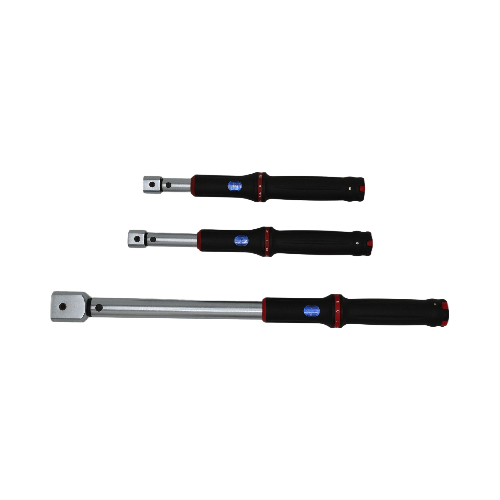 XS Series Interchangeable Head Window Style Cli...
TENGTUO ELECTRONIC TECHNOLOGY Item NO...
-
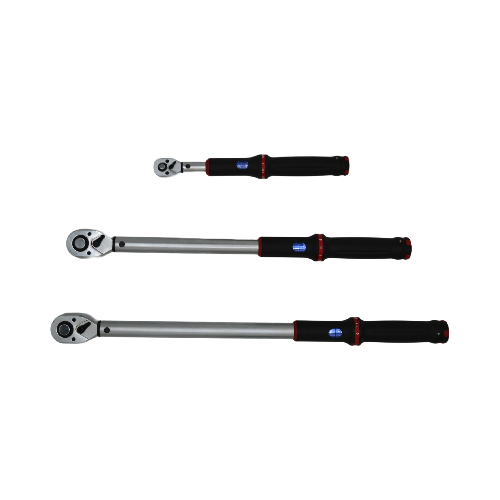 XS Series Window Style Click Torque Wrench
TENGTUO ELECTRONIC TECHNOLOGY Item NO...
-
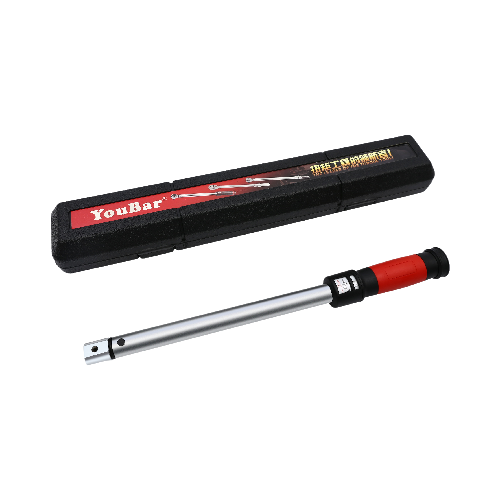 SL Series Interchangeable Head Window Style Cli...
TENGTUO ELECTRONIC TECHNOLOGY item NO...