
+86 18116360585
- English
- Chinese
- French
- German
- Portuguese
- Spanish
- Russian
- Japanese
- Korean
- Arabic
- Irish
- Greek
- Turkish
- Italian
- Danish
- Romanian
- Indonesian
- Czech
- Afrikaans
- Swedish
- Polish
- Basque
- Catalan
- Esperanto
- Hindi
- Lao
- Albanian
- Amharic
- Armenian
- Azerbaijani
- Belarusian
- Bengali
- Bosnian
- Bulgarian
- Cebuano
- Chichewa
- Corsican
- Croatian
- Dutch
- Estonian
- Filipino
- Finnish
- Frisian
- Galician
- Georgian
- Gujarati
- Hausa
- Hawaiian
- Hebrew
- Hmong
- Hungarian
- Icelandic
- Igbo
- Javanese
- Kannada
- Kazakh
- Khmer
- Kurdish
- Kyrgyz
- Latin
- Latvian
- Lithuanian
- Luxembou..
- Macedonian
- Malagasy
- Malay
- Malayalam
- Maltese
- Maori
- Marathi
- Mongolian
- Burmese
- Nepali
- Norwegian
- Pashto
- Persian
- Punjabi
- Serbian
- Sesotho
- Sinhala
- Slovak
- Slovenian
- Somali
- Samoan
- Scots Gaelic
- Shona
- Sindhi
- Sundanese
- Swahili
- Tajik
- Tamil
- Telugu
- Thai
- Ukrainian
- Urdu
- Uzbek
- Vietnamese
- Welsh
- Xhosa
- Yiddish
- Yoruba
- Zulu
- Kinyarwanda
- Tatar
- Oriya
- Turkmen
- Uyghur


Digital torque wrench accuracy at 20–100 N·m must be judged against the specific wrench model, its stated measuring range, the tightening direction and suitable verification evidence. A published accuracy percentage is not enough on its own. First establish whether the selected instrument covers every torque setting in your work; then examine where the claimed accuracy applies and how it was checked.
For example, YOUBAR’s ratchet digital torque wrench listing includes YBS-100 with a stated 5–100 N·m range and YBS-200 with a stated 10–200 N·m range. Both numerically cover the 20–100 N·m operating band, but that overlap does not prove they have identical error at 20, 50 or 100 N·m. This article sets out a practical evaluation method, using published product-page figures as specifications rather than independent measurements.
What Does Accuracy Mean at 20–100 Nm?
Accuracy concerns how closely a reported or applied torque corresponds to an appropriate reference value. The tightening target is the value prescribed for the joint; the tool’s display is its indication; and the torque actually transmitted to the fastener may be affected by the setup and technique. Repeatability—how consistently measurements agree under stated conditions—is a related but different question.
Suppose a tool has a stated percentage accuracy. The buyer still needs to know whether the percentage is of the indicated value, the target setting or another reference, and which operating conditions the statement covers. A percentage printed on a product page should not be treated as a universal bound at all temperatures, torque points or orientations. For a production process using 20, 40, 60, 80 and 100 N·m, each required point should be considered within the applicable evidence.
Which Digital Torque Wrench Ranges Cover 20–100 Nm?
The YOUBAR ratchet digital torque wrench product listing contains these YBS model specifications. The comparison checks whether the published endpoints contain the entire 20–100 N·m working interval; it does not rank verified accuracy.
| Listed model | Published range | Square drive | Covers all of 20–100 N·m? |
|---|---|---|---|
| YBS-85 | 4.2–85 N·m | 1/2 in | No: excludes 100 N·m |
| YBS-100 | 5–100 N·m | 1/2 in | Yes, numerically |
| YBS-135 | 6.8–135 N·m | 1/2 in | Yes, numerically |
| YBS-200 | 10–200 N·m | 1/2 in | Yes, numerically |
| YBS-400 | 20–400 N·m | 1/2 in | Yes, numerically |
A 100 N·m target sits at the published upper endpoint of YBS-100, whereas 100 N·m is inside YBS-200’s range away from that endpoint. This difference is worth checking against model-specific verification evidence, but it is not proof that one model is more accurate. Likewise, YBS-400 has a listed minimum of 20 N·m; that endpoint deserves scrutiny rather than an unsupported conclusion that the tool is unsuitable.
How Should Buyers Interpret ±2% Accuracy Claims?
Clockwise and Counter-Clockwise Accuracy
The YBS table on the site lists ±2% clockwise and ±2.5% counter-clockwise. These are published specifications, not results of testing performed for this article. A wrench used in the opposite direction should not automatically be assessed against its clockwise claim. Confirm what operation each figure covers and whether the direction is appropriate for the actual fastening procedure.
Accuracy Across the Working Range
When comparing digital torque wrench accuracy at 20–100 N·m, request evidence relevant to the torque points that matter to your process. A record showing only a high-end check may not answer a buyer’s question about a low-end fastening target. Conversely, testing only at 20 N·m cannot establish performance across the full band. The exact required points and acceptance limits should follow the buyer’s application and quality rules.
Accuracy Versus Display Resolution
A digital screen may display small increments without verifying that the applied torque has the same absolute uncertainty. Resolution describes the scale of displayed changes; accuracy describes agreement with a reference under stated conditions. Buyers should confirm both independently, especially if their process tolerance is narrow.
What Should a Calibration or Accuracy Record Show?
A meaningful record identifies which tool was checked and under what conditions. Depending on the buyer’s process, review the model and serial identification, test date, measuring equipment or reference, test method, tightening direction, checked torque points, observed deviations and acceptance criteria. If measurement uncertainty or traceability information is required by the buyer’s quality system, request the relevant supporting documentation.
Do not assume every YBS model is supplied with a particular certificate solely because the website describes precision. A quotation should distinguish published specifications, a sample inspection report and any separately required calibration service or documentation. A certificate heading without model or test-point detail may fail to answer the real engineering question.
What Can Cause Displayed and Applied Torque to Differ?
Even a correctly specified wrench can give disappointing fastening outcomes if the setup is wrong. The following are general factors to examine, not reported faults in YOUBAR products:
| Factor | Potential issue | Practical check |
|---|---|---|
| Wrong torque unit or operating mode | Target and displayed values may be misread | Confirm N·m setting and prescribed mode before work |
| Incorrect target or joint instruction | The tool may reach the wrong requested value | Use the applicable assembly specification |
| Changed adapter or effective lever arm | The complete setup may require an adjustment or validation | Review accessory geometry and the relevant instructions |
| Off-axis handling or inconsistent technique | Applied loading may differ from intended conditions | Use the method specified for the tool and joint |
| Impact, overload or uncertain tool condition | Past handling may affect confidence in the reading | Inspect and verify the instrument as required |
For limited access, an interchangeable-head digital torque wrench could be investigated, but changing head geometry must not be treated as a drop-in substitution without checking the manufacturer’s instructions and the completed fastening setup.
How to Compare Digital Torque Wrenches for a 20–100 Nm Application
Define the Actual Torque Points
List every production setting and its permissible deviation. A process with only 80 N·m fasteners has different coverage needs from one using the full 20–100 N·m band. Do not let a search phrase stand in for an actual joint specification.
Compare the Published Specifications
Shortlist models whose stated ranges contain every required setting. Compare drive size, head format, tightening direction and digital functions. The digital display torque wrench category is useful for reviewing the product family before comparing individual configurations.
Request Application-Specific Evidence
Ask for applicable documentation at the relevant target points and directions. Identify whether each value is a published claim, a report from a particular tool or a buyer-requested acceptance criterion. For more demanding processes, evaluate a representative sample in accordance with the buyer’s approved procedure.
Confirm the Complete Setup
Record sockets, adapters, extension geometry, working clearance, operator procedure and any required modes or presets. Two wrenches with similar numerical ranges may require different accessories or access arrangements.
Frequently Asked Questions
Does ±2% accuracy apply at every torque setting?
Not necessarily. The claimed value needs an identified calculation basis and applicable range, direction and conditions. Review relevant model-specific evidence before relying on it for a critical joint.
Is a 5–100 Nm wrench automatically better than a 10–200 Nm wrench?
No. Both published ranges include 20–100 N·m, but relative accuracy, verification coverage, configuration and intended use cannot be decided by the endpoints alone.
Can a digital torque wrench be used at its maximum rated torque?
A published maximum is a specification boundary, not permission to ignore the operating instructions or required accuracy evidence. Check the precise model, stated working range and relevant verification.
Is calibration the same as an accuracy guarantee?
No. Calibration documents the relationship between indications and reference values under defined conditions. It does not guarantee all future results regardless of handling, accessories or technique.
Bottom line: For 20–100 N·m work, compare actual torque points, direction-specific accuracy statements and relevant evidence—not just the most attractive percentage on a specification sheet. For a model-specific review, contact YOUBAR with your torque schedule, drive requirements and documentation criteria.
Previous News
How to Choose a Digital Torque Wrench for 0–10 ...Next News
How to Calculate Torque Wrench Settings with an...Feature Product
-
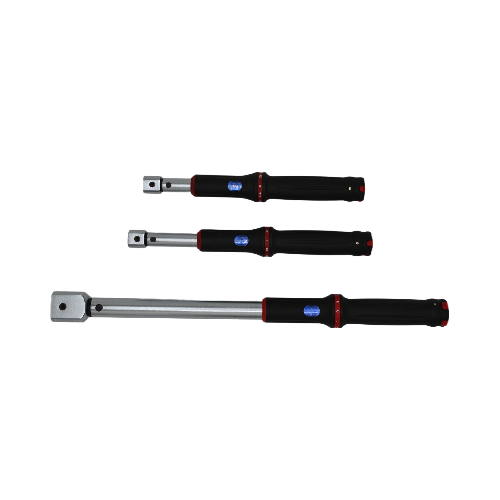 XS Series Interchangeable Head Window Style Cli...
TENGTUO ELECTRONIC TECHNOLOGY Item NO...
-
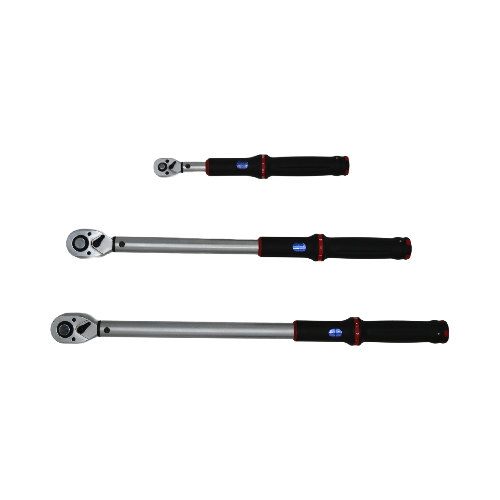 XS Series Window Style Click Torque Wrench
TENGTUO ELECTRONIC TECHNOLOGY Item NO...
-
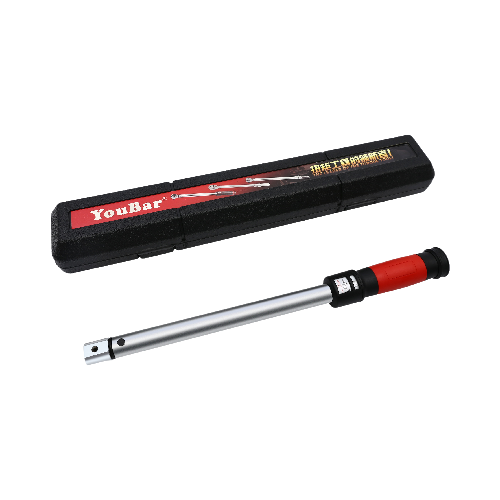 SL Series Interchangeable Head Window Style Cli...
TENGTUO ELECTRONIC TECHNOLOGY item NO...