
+86 18116360585


Have you ever wondered if that bolt on your car or bike is "tight enough"? In the world of mechanics, guessing can be a costly mistake. Enter the torque wrench—the most critical tool for ensuring safety and mechanical integrity.
Whether you're a DIY enthusiast or a budding mechanic, this guide will walk you through everything you need to know about this precision instrument.

What is a Torque Wrench?
A torque wrench is a specialized socket wrench that allows you to apply a specific amount of pressure (torque) to a fastener (bolt or nut). Unlike a standard wrench, it tells you exactly when to stop, preventing over-tightening (which snaps bolts) or under-tightening (which leads to parts falling off).
Why Do You Actually Need One?
Standard wrenches rely on "feel," but modern machinery relies on specifications.
• Safety: Critical components like wheel lugs or cylinder heads must be tightened to exact manufacturer specs.
• Preventing Damage: Aluminum parts are easily stripped if too much force is applied.
• Uniformity: Ensuring all bolts on a surface (like a rim) have equal pressure prevents warping.
Types of Torque Wrenches: Which One Should You Buy?
1. Click Torque Wrench (Most Popular)
The "workhorse" of the garage. You pre-set the desired torque on the handle. When you reach that limit, the wrench makes an audible "click" and stays slightly decoupled.
-
Pros: Easy to use, loud feedback.
-
Cons: Needs regular calibration.
2. Beam Torque Wrench (The Budget Choice)
A simple design using a long beam and a scale. As you pull, the beam stays straight while the pointer moves along the scale.
-
Pros: Cheap, never needs calibration.
-
Cons: Harder to read from certain angles.
3. Digital/Electronic Torque Wrench
The high-tech option. It features an LCD screen and often vibrates or beeps when the target torque is met.
-
Pros: Extremely precise, multiple units (ft-lb, Nm).
-
Cons: Expensive, requires batteries.
How to Use a Torque Wrench Like a Pro
1. Check the Specs: Look up the required torque in your vehicle's manual (usually in Foot-Pounds (ft-lb) or Newton-Meters (Nm)).
2.Adjust the Setting: Unlock the handle and twist it to the desired number on the scale, then lock it back.
3.Tighten Smoothly: Place the wrench on the bolt and pull in a slow, steady motion. Do not jerk it.
4.Listen for the "Click": As soon as you hear or feel the click, STOP. Applying more force after the click will over-torque the bolt.
5.Return to Zero: After finishing, always dial the wrench back to its lowest setting to relieve tension on the internal spring.
Pro Maintenance Tips (To Make It Last Years)
• Never Use it to Loosen Bolts: Use a "breaker bar" for that. A torque wrench is for tightening only.
• Store It at "Zero": Leaving it at high tension will ruin the accuracy over time.
• Calibrate Annually: If you use it often, get it professionally calibrated once a year.
Feature Product
-
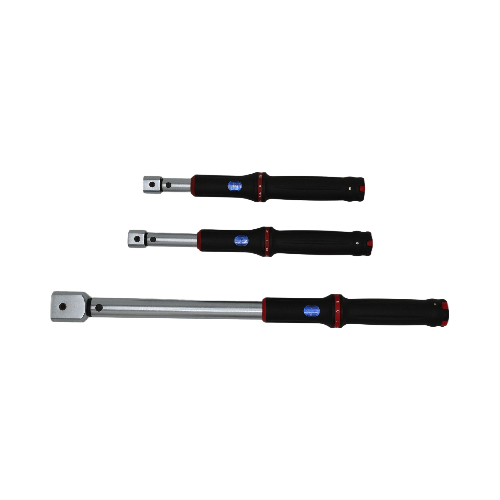 XS Series Interchangeable Head Window Style Cli...
TENGTUO ELECTRONIC TECHNOLOGY Item NO...
-
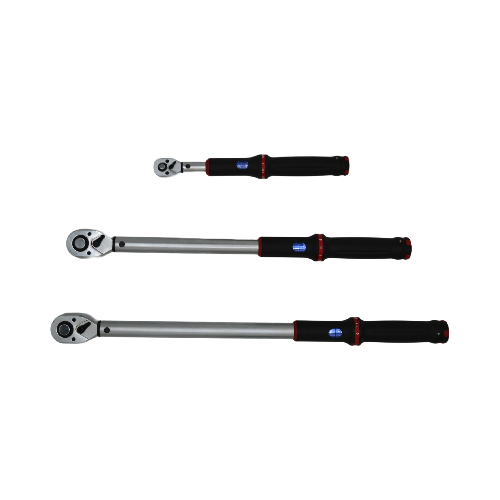 XS Series Window Style Click Torque Wrench
TENGTUO ELECTRONIC TECHNOLOGY Item NO...
-
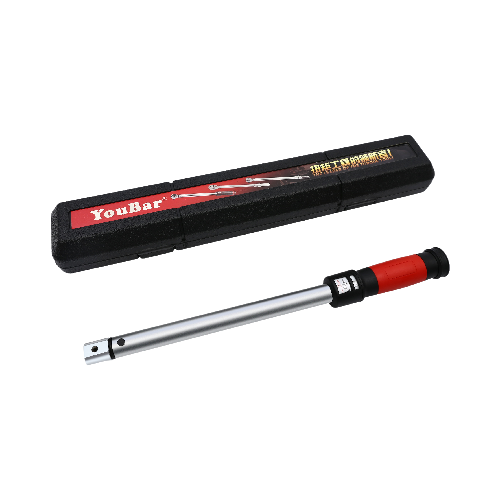 SL Series Interchangeable Head Window Style Cli...
TENGTUO ELECTRONIC TECHNOLOGY item NO...