
+86 18116360585
- Chinese
- French
- German
- Portuguese
- Spanish
- Russian
- Japanese
- Korean
- Arabic
- Irish
- Greek
- Turkish
- Italian
- Danish
- Romanian
- Indonesian
- Czech
- Afrikaans
- Swedish
- Polish
- Basque
- Catalan
- Esperanto
- Hindi
- Lao
- Albanian
- Amharic
- Armenian
- Azerbaijani
- Belarusian
- Bengali
- Bosnian
- Bulgarian
- Cebuano
- Chichewa
- Corsican
- Croatian
- Dutch
- Estonian
- Filipino
- Finnish
- Frisian
- Galician
- Georgian
- Gujarati
- Haitian
- Hausa
- Hawaiian
- Hebrew
- Hmong
- Hungarian
- Icelandic
- Igbo
- Javanese
- Kannada
- Kazakh
- Khmer
- Kurdish
- Kyrgyz
- Latin
- Latvian
- Lithuanian
- Luxembou..
- Macedonian
- Malagasy
- Malay
- Malayalam
- Maltese
- Maori
- Marathi
- Mongolian
- Burmese
- Nepali
- Norwegian
- Pashto
- Persian
- Punjabi
- Serbian
- Sesotho
- Sinhala
- Slovak
- Slovenian
- Somali
- Samoan
- Scots Gaelic
- Shona
- Sindhi
- Sundanese
- Swahili
- Tajik
- Tamil
- Telugu
- Thai
- Ukrainian
- Urdu
- Uzbek
- Vietnamese
- Welsh
- Xhosa
- Yiddish
- Yoruba
- Zulu
- Kinyarwanda
- Tatar
- Oriya
- Turkmen
- Uyghur


How Should Industrial Buyers Choose a Digital Torque Wrench Range Around the Actual Joint Torque?
Direct Answer: Choose a digital torque wrench range that keeps the normal joint torque well inside the exact model’s specified working window while still covering the lowest and highest approved joints. Then verify drive size, head access, tightening direction, overload margin, feedback method, and calibration coverage. A wrench selected only by maximum capacity can leave routine low-torque work outside reliable control.
This selection method is intended for industrial assembly plants, maintenance teams, automotive and aviation service organizations, energy equipment operators, rail workshops, calibration providers, and tool distributors. Their shared problem is not finding the highest-capacity wrench. It is building a controlled tightening tool plan that covers real joints without creating avoidable accuracy gaps, access problems, calibration cost, or operator confusion. Buyers can begin with Youba’s torque wrench product category and then narrow the specification using the joint data described below.
What Joint Data Must Be Collected Before Selecting the Range?
The correct digital torque wrench range starts with a joint list, not a tool catalog. Every controlled joint should be documented by target torque, allowable tolerance, tightening direction, fastener type, lubrication condition, access, frequency, and consequence of an incorrect result.
| Joint Data | Why the Buyer Needs It | Risk if It Is Missing |
|---|---|---|
| Minimum approved joint torque | Shows whether the tool’s stated lower working limit covers the lowest controlled joint. | The buyer selects a high-capacity wrench whose routine low-torque work falls outside the qualified range. |
| Normal production torque | Identifies where most tightening cycles will occur and where repeatability matters most. | The tool technically reaches the value but operates near an unsuitable end of its range for most work. |
| Maximum approved joint torque | Confirms capacity and the required margin against accidental overloading. | The wrench is repeatedly used at or beyond its intended limit, increasing drift and damage risk. |
| Tightening direction | Determines whether clockwise, counter-clockwise, or both directions require controlled measurement. | A quotation appears suitable but does not cover the actual direction used on the joint. |
| Drive, socket, and head access | Connects torque range with the available square drive, socket inventory, and physical access. | The torque range is correct, but the tool cannot reach the fastener or requires an unplanned adapter. |
| Joint frequency and criticality | Helps determine whether one shared tool, dedicated tools, or backup coverage is justified. | High-use or safety-critical joints depend on one tool with no spare or verification plan. |
A common procurement mistake is using bolt diameter as the only input. The same nominal fastener size can have different torque requirements because of material, grade, lubrication, coating, joint design, tightening method, and engineering specification. The approved joint torque must come from the buyer’s controlled process or technical requirement.
Another mistake is combining every department’s torque values into one uncontrolled spreadsheet. Before requesting quotations, remove duplicate joints, identify which values are genuinely approved, and separate routine production work from occasional maintenance tasks. This prevents an infrequently used high-torque joint from forcing the entire organization into an oversized tool.
Why Does the Lower Limit Matter More Than Many Buyers Expect?
Buyers often compare digital torque wrenches by maximum torque because it is easy to see in a product table. In industrial use, the lower working limit can be more important. A wrench may display a low value, but display capability is not the same as the manufacturer’s stated accuracy-qualified or working range.
The supplier should therefore confirm, for the exact quoted model:
- The complete stated torque range
- The portion of that range covered by the stated accuracy
- Accuracy by tightening direction
- Display resolution and available units
- How the tool warns the operator as the target is approached and reached
- What happens after an overload event
- What range is included in the supplied calibration or inspection documentation
An experienced buyer does not approve a tool merely because every target value appears between the printed minimum and maximum. The normal production torque should sit in a practical part of the supplier-confirmed working window, with enough room for process tolerances and operator control.
This is also why a single very wide range is not always the lowest-cost solution. It may reduce the number of purchase orders while increasing low-end uncertainty, drive adapters, operator selection errors, calibration complexity, and downtime when the only tool is unavailable.
When Is One Wide-Range Wrench Better Than Two Narrower Ranges?
The decision should be based on the joint portfolio and total operating cost. A wide-range tool can be efficient when the joint values are relatively concentrated, the drive and head requirements are similar, and the supplier confirms that the normal work remains inside the qualified range. Two narrower tools are often more practical when the joint values are widely separated or require different drives, heads, access, and calibration schedules.
| Decision Area | One Wide-Range Tool | Two Narrower Tools |
|---|---|---|
| Joint coverage | Useful when low, normal, and high joints remain inside the confirmed working window. | Useful when low-torque and high-torque groups are separated by a large gap. |
| Drive compatibility | Can simplify inventory when one drive size fits most applications. | Reduces adapters when low and high ranges naturally use different drive sizes. |
| Operator control | Fewer tools to identify and manage. | Clear tool-to-joint assignment can reduce wrong-range selection. |
| Calibration workload | One asset to schedule, verify, and record. | More assets, but each can be calibrated around its actual work and usage cycles. |
| Downtime risk | One failure or calibration event can stop all covered work. | Provides partial backup and allows different departments to work independently. |
| Purchase cost | Lower initial tool count, but adapters and accessories may add cost. | Higher initial tool count, but potentially lower rework and access-related cost. |
The cheapest quotation is not necessarily the lowest installed cost. Buyers should include sockets, interchangeable heads, adapters, cases, batteries, calibration handling, spare coverage, operator training, and expected service interruption in the comparison.
How Should Drive Size and Head Access Affect the Range Plan?
Torque range and physical access must be selected together. A technically suitable range can still fail in production when the square drive is too large for the available socket, the ratchet head cannot enter the assembly, or an extension changes the effective tool geometry.
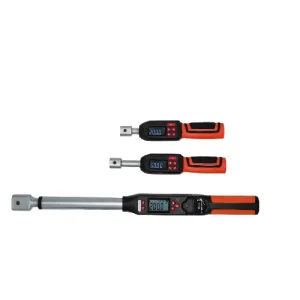
For restricted-access assembly, Youba lists an interchangeable-head digital torque wrench with ±2% stated accuracy, buzzer, and LED flash. This product type may support different head arrangements, but the buyer must confirm the exact insert, opening size, effective length, torque range, and any correction requirement for the quoted combination.
Industry experience shows five recurring access-related problems:
- A correct torque range is purchased with the wrong square drive for the plant’s socket inventory.
- An adapter is added after approval, but its effect on access, leverage, and tool handling is not reviewed.
- An open-end or crowfoot head is required, but the RFQ specifies only a ratchet head.
- The head reaches the fastener, but the handle cannot move through the required angle.
- Different insert heads are treated as interchangeable without checking effective length and the supplier’s instructions.
For each joint family, the RFQ should include a photograph or drawing of the access envelope, the fastener orientation, socket or insert size, and any nearby obstruction. This information often eliminates unsuitable models before samples are ordered.
How Much Overload Margin Should the Buyer Plan?
Overload margin should prevent normal process variation from pushing the tool beyond its intended capacity. It is not permission to use the wrench as a breaker bar, impact tool, or general-purpose ratchet. The buyer should compare the maximum approved joint torque, torque tolerance, likely operator overshoot, and any temporary process condition against the exact model’s stated limit.
A hidden cost appears when production repeatedly works near maximum capacity. Even when the tool reaches the target, frequent overshoot can increase overload events, verification failures, repairs, and unscheduled calibration. A higher-capacity model may solve this issue, but only when its lower working range still covers the routine joints.
The procurement team should ask the supplier to explain:
- Maximum rated torque for the exact model
- Recommended working window
- Overload warning or protection behavior
- Inspection steps after a suspected overload
- Whether an overload is stored or indicated
- Conditions that require verification or recalibration
Do not assume that a buzzer or LED warning prevents overload. Feedback helps the operator approach a target, but training, pull speed, grip position, reaction time, and joint behavior still affect the final result.
How Should Direction, Units, and Feedback Be Specified?
A quotation should identify more than torque capacity. Industrial buyers need the exact measurement and operator-feedback functions used in their process.
| Function | Buyer Question | Approval Risk |
|---|---|---|
| Clockwise and counter-clockwise operation | Which directions are measured, and what accuracy is stated for each direction? | The tool is approved using clockwise data but is later used for counter-clockwise joints. |
| Torque units | Which units are available, and can operators lock or control unit selection? | Incorrect unit selection causes a major tightening error despite a correct numerical target. |
| Buzzer and LED feedback | How are approach, target, and overload conditions communicated? | Operators interpret warning stages differently or cannot see or hear the signal in the work environment. |
| Display readability | Can the display be read in the actual tool orientation and lighting? | The operator rotates the tool, changes grip, or ignores the display in restricted access. |
| Memory or data handling | Is data storage required by the buyer, and what evidence must be retained? | A feature is purchased but does not match the plant’s traceability workflow. |
The warning method should be evaluated in the real environment. A buzzer that is clear in an office may be difficult to hear in a workshop. An LED may be hidden by the operator’s hand or the orientation of a recessed joint. Sample approval should include actual users and representative work positions.
What Calibration Coverage Should Be Confirmed Before Ordering?
The buyer should request calibration or inspection documentation for the exact model and range being supplied, rather than accepting a generic statement about accuracy. The document scope should match the intended torque range, direction, serial-number control, and internal quality requirements.
Before approval, confirm:
- Which torque points are checked
- Which directions are included
- How the tool and certificate are linked by model or serial number
- Whether the complete intended working range is covered
- What verification is recommended after transport, impact, overload, or repair
- Whether recalibration support is available for the destination market or through the buyer’s calibration provider
- How spare tools will be controlled during scheduled calibration
A common supplier-evaluation error is comparing one quotation with model-specific documentation against another quotation with only a brochure accuracy claim. These offers are not equivalent. The RFQ should state the required evidence so every supplier prices the same scope.
What Does a Representative Industrial Range-Selection Scenario Look Like?
Scenario: Digital torque wrench planning for a rail equipment maintenance workshop. This is a representative industrial application scenario, not a claimed Youba customer case.
Business Background: The workshop controls low-torque electrical and interior fasteners, medium-torque equipment brackets, and higher-torque mechanical joints. Purchasing wants one digital wrench to simplify tool management.
Problem: The proposed wrench covers the highest joint on paper, but most daily work is close to the lower end of the quoted range. It also uses a drive size that requires adapters for several routine sockets, while some recessed joints need an open-end or interchangeable head.
Cause: The RFQ lists only minimum and maximum torque. It does not identify normal daily torque, usage frequency, access, drive inventory, tightening direction, feedback needs, or calibration coverage.
Solution: The workshop separates the joints into two working groups, confirms the supplier-stated range for each tool, assigns the correct drives and heads, and tests representative joints with actual operators. Calibration and backup requirements are added to the purchasing scope.
Buyer Decision Value: The two-tool plan has a higher initial purchase cost but reduces adapter use, low-end coverage risk, operator selection errors, and total shutdown during calibration. The decision is based on controlled-joint coverage and operating cost rather than the fewest possible tools.
How Should Tool Distributors Plan a Commercial Product Range?
Distributors and private-label buyers face a broader decision than a single factory. Their product range should cover distinct customer groups without creating overlapping models that are difficult to stock, explain, calibrate, or support.
A practical distributor matrix can be organized by:
- Low-, medium-, and higher-torque application bands
- 1/4-inch, 3/8-inch, and 1/2-inch drive demand
- Ratchet versus interchangeable-head applications
- Individual tool versus complete set
- Workshop, maintenance, automotive, rail, energy, and general industrial use
- Required feedback, packaging, labeling, manuals, and OEM scope
For customers who need a packaged 3/8-inch solution, Youba lists a 21-piece 3/8-inch drive digital torque wrench set with ±2% stated accuracy, buzzer, and LED flash. Buyers should confirm the exact included accessories, range, packaging, and target application before using it as a standard distributor SKU.
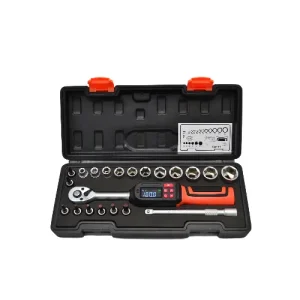
The digital display torque wrench category can support comparison of available digital configurations. A distributor should still request a model-by-model matrix rather than assuming that every digital wrench shares the same range, drive, head, accuracy scope, or included accessories.
What Should the RFQ Include for a Comparable Quotation?
| RFQ Section | Information the Buyer Should Provide | Supplier Confirmation Required |
|---|---|---|
| Joint portfolio | Minimum, normal, and maximum approved torque; tolerance; direction; frequency; criticality. | Recommended model and the stated working range covering each joint group. |
| Drive and access | Square drive, socket inventory, insert type, opening size, access drawing, and obstructions. | Head configuration, effective-length considerations, and included or optional accessories. |
| Operator feedback | Required units, buzzer, LED, display, target-setting, memory, or data requirements. | Exact available functions and any limitations for the proposed model. |
| Calibration and inspection | Required torque points, directions, certificate information, serial control, and recalibration plan. | Documentation supplied, scope covered, and available after-sales calibration support. |
| Commercial requirements | Quantity, forecast, sample quantity, packaging, labeling, manuals, destination, and delivery target. | MOQ, lead time, customization scope, quotation validity, packing, and exclusions. |
| Approval method | Representative joints, operators, test conditions, acceptance limits, and sample review process. | Sample configuration and written confirmation that production supply will match the approved model. |
The buyer should ask every supplier to identify assumptions and deviations in writing. A lower quotation may exclude heads, sockets, calibration documentation, spare coverage, OEM packaging, or after-sales support included elsewhere.
Frequently Asked Questions
Should the normal joint torque be placed near the middle of the wrench range?
The normal torque should be placed in a practical part of the exact model’s supplier-confirmed working range, with room for the approved process tolerance. Do not apply a universal percentage rule without checking the manufacturer’s stated range and accuracy coverage.
Can one digital torque wrench cover every joint in a factory?
Sometimes, but only when all joints fit the confirmed working range and share compatible drive, head, access, direction, and calibration requirements. Widely separated joint groups often justify two or more tools.
Why is maximum torque alone not enough for selection?
Maximum torque does not confirm lower-limit performance, normal working position, drive compatibility, access, feedback, tightening direction, or calibration coverage. These factors determine whether the tool can control the actual process.
Does a larger square drive mean a better digital torque wrench?
No. Drive size should match the torque range, socket inventory, fastener size, access, and application. An unnecessarily large drive can increase adapter use and make restricted joints more difficult to reach.
When should an interchangeable-head digital torque wrench be considered?
Consider it when ratchet access is restricted or the process requires open-end, box-end, crowfoot, or other insert heads. Confirm the exact insert dimensions, effective length, torque range, and correction instructions.
What should be checked on a digital torque wrench sample?
Check representative joints, lower and normal working values, direction, display and feedback visibility, drive and head access, operator handling, target-setting steps, documentation, and repeatability across multiple users.
What information is needed for an OEM or distributor quotation?
Provide the intended markets, target torque bands, drives, head types, set contents, quantity, packaging, branding, manuals, calibration documentation, sample plan, destination, and delivery target.
Request a Joint-Range and Configuration Review
Prepare a joint list showing minimum, normal, and maximum torque, tightening direction, tolerance, usage frequency, drive size, socket or insert requirements, access drawings, calibration needs, quantity, destination, packaging, and delivery target. Submit it through Youba’s contact and quotation page. The team can review suitable digital torque wrench configurations, identify missing specification data, discuss samples and OEM requirements, and prepare a quotation with the proposed scope, accessories, documentation, assumptions, and exclusions.
Previous News
How Should Industrial Buyers Choose a Digital T...Next News
Why Can a Digital Torque Wrench Drift Out of Ca...Feature Product
-
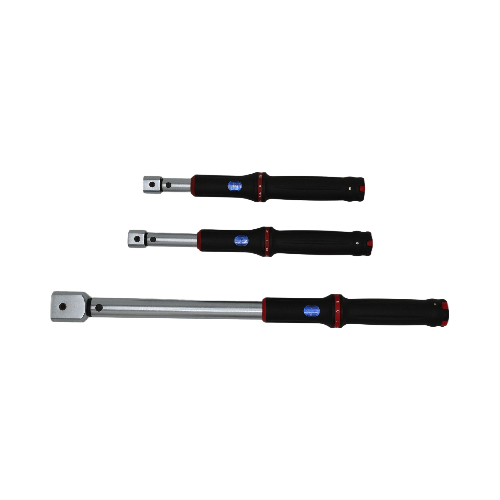 XS Series Interchangeable Head Window Style Cli...
TENGTUO ELECTRONIC TECHNOLOGY Item NO...
-
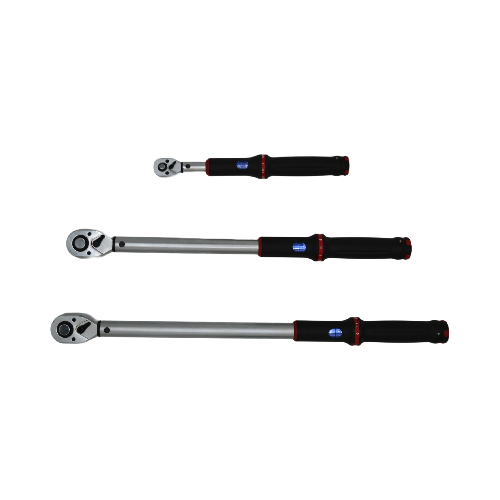 XS Series Window Style Click Torque Wrench
TENGTUO ELECTRONIC TECHNOLOGY Item NO...
-
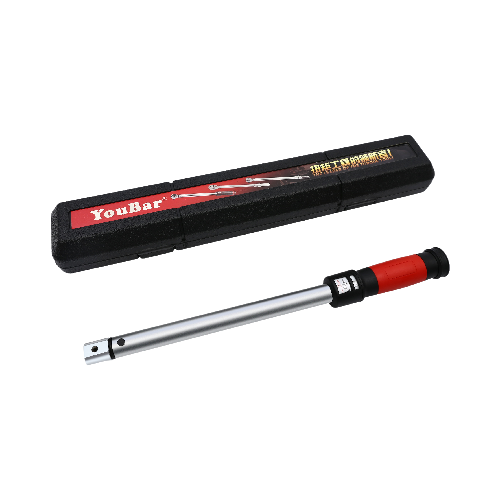 SL Series Interchangeable Head Window Style Cli...
TENGTUO ELECTRONIC TECHNOLOGY item NO...