
+86 18116360585
- Chinese
- French
- German
- Portuguese
- Spanish
- Russian
- Japanese
- Korean
- Arabic
- Irish
- Greek
- Turkish
- Italian
- Danish
- Romanian
- Indonesian
- Czech
- Afrikaans
- Swedish
- Polish
- Basque
- Catalan
- Esperanto
- Hindi
- Lao
- Albanian
- Amharic
- Armenian
- Azerbaijani
- Belarusian
- Bengali
- Bosnian
- Bulgarian
- Cebuano
- Chichewa
- Corsican
- Croatian
- Dutch
- Estonian
- Filipino
- Finnish
- Frisian
- Galician
- Georgian
- Gujarati
- Haitian
- Hausa
- Hawaiian
- Hebrew
- Hmong
- Hungarian
- Icelandic
- Igbo
- Javanese
- Kannada
- Kazakh
- Khmer
- Kurdish
- Kyrgyz
- Latin
- Latvian
- Lithuanian
- Luxembou..
- Macedonian
- Malagasy
- Malay
- Malayalam
- Maltese
- Maori
- Marathi
- Mongolian
- Burmese
- Nepali
- Norwegian
- Pashto
- Persian
- Punjabi
- Serbian
- Sesotho
- Sinhala
- Slovak
- Slovenian
- Somali
- Samoan
- Scots Gaelic
- Shona
- Sindhi
- Sundanese
- Swahili
- Tajik
- Tamil
- Telugu
- Thai
- Ukrainian
- Urdu
- Uzbek
- Vietnamese
- Welsh
- Xhosa
- Yiddish
- Yoruba
- Zulu
- Kinyarwanda
- Tatar
- Oriya
- Turkmen
- Uyghur


A torque wrench with a stated accuracy of ±2%, ±3%, or ±4% can still produce inconsistent fastening if the selected range, operator technique, interchangeable head, joint condition, or verification process is not controlled. This matters to automotive workshops, industrial assembly plants, machinery manufacturers, maintenance teams, and tool distributors that rely on repeatable bolt tightening. The accuracy printed on a tool describes its output under defined test conditions; it does not guarantee identical bolt preload in every real application. Buyers should therefore evaluate more than the headline accuracy figure. The most important factors include the working torque range, tightening direction, hand position, fastening speed, head geometry, thread condition, calibration status, and application risk. This guide explains how these factors interact and what industrial buyers should include when requesting a torque wrench quotation.
What Does Torque Wrench Accuracy Actually Mean?
Torque wrench accuracy describes how closely the tool’s output remains to its selected or indicated torque value under specified test conditions.
For example, when a wrench is set to 100 N·m, its measured output should remain within the permitted deviation stated by the manufacturer or applicable testing standard.
However, an accuracy rating does not automatically describe:
- Actual bolt preload
- Clamp force inside the joint
- Repeatability between operators
- Performance at every marked scale value
- Results after the tool has been dropped
- Performance with every extension or insert head
- Changes caused by lubrication or coatings
- Long-term stability between calibrations
Accuracy, repeatability, display resolution, and calibration uncertainty are related but different concepts.
A digital tool may display torque in very small increments, but this does not mean the complete tool has the same level of overall accuracy. The sensor, mechanical construction, calibration procedure, head configuration, and operator technique all affect the final result.
When comparing suppliers, buyers should ask:
- What accuracy is declared?
- Is the accuracy clockwise, counterclockwise, or both?
- What part of the torque range is covered?
- Which test standard is used?
- Is an individual test report available?
- Does the certificate cover the supplied head configuration?
Why Can the Same Torque Setting Produce Different Results?
A torque wrench controls rotational force applied to the fastener. The engineering purpose of tightening is usually to create bolt preload and clamp the joint securely.
Torque and preload are related, but they are not identical.
A large portion of the applied torque is used to overcome friction at:
- The bolt threads
- The nut threads
- The underside of the bolt head
- The washer
- The joint contact surface
This means two fasteners tightened to the same torque may develop different clamp forces when their surface conditions are different.
Possible causes include:
- One bolt is dry and the other is lubricated.
- One fastener is zinc plated and the other is black finished.
- Anti-seize compound is used on only some joints.
- Threads contain dirt, rust, paint, or metal chips.
- A nut has already been reused several times.
- Different washers are installed.
- The joint surfaces have not fully seated.
A calibrated torque wrench cannot correct an inconsistent fastening specification.
The assembly instruction should therefore clarify:
- Fastener grade
- Thread condition
- Lubrication condition
- Coating
- Washer arrangement
- Tightening sequence
- Target torque
- Permitted tolerance
The Working Range Can Matter More Than Maximum Torque
Buyers often select a torque wrench by looking only at the maximum torque value.
For example, a user who needs to tighten a fastener to 25 N·m may select a 20–200 N·m wrench because 25 N·m appears within the marked scale.
The tool may technically cover that value, but it may not be the most suitable choice.
A better selection process considers:
- The tool’s declared working range
- The most frequently used torque value
- Scale readability
- Operator control
- Drive size
- Tool length and weight
- Required access around the fastener
- Accuracy at the working point
If most work is performed close to the lower limit of a large wrench, a smaller-range tool may provide:
- Easier adjustment
- Clearer scale readings
- Better operator control
- Lower weight
- More suitable socket sizes
- Reduced risk of setting errors
Industrial users may need several torque ranges rather than one large wrench intended to cover every assembly task.
YouBar’s mechanical torque wrench range includes click-type, fixed-value, ratchet-head, and interchangeable-head designs for different torque ranges and working environments.
Accuracy and Repeatability Are Not the Same
A tool can be close to the target value on average but produce greater variation between repeated cycles.
Another tool may produce very consistent results, but all results may be slightly above or below the target.
For controlled assembly, buyers should distinguish:
Accuracy
How close the measured output is to the selected torque.
Repeatability
How consistently the wrench produces similar results under the same conditions.
Resolution
The smallest scale division or display increment the operator can see.
Calibration uncertainty
The level of confidence associated with the calibration measurement.
A tool with a fine digital display is not necessarily more repeatable than a well-made mechanical wrench used correctly.
The purchasing decision should reflect the actual assembly process rather than relying on one specification number.
Interchangeable Heads Can Change the Effective Lever Length
Interchangeable-head torque wrenches are useful when a standard ratchet head cannot reach the fastener.
Typical applications include:
- Hydraulic pipe fittings
- Brake lines
- Industrial tubing
- Machinery frames
- Flange connections
- Electrical equipment
- Restricted assembly spaces
- Open-end fasteners that cannot accept a socket
Buyers can combine compatible handles with interchangeable torque wrench heads, including open-end, box-end, ratchet, and crowfoot-style inserts.
However, an interchangeable head may change the effective distance between the wrench handle and the fastener center.
This can affect the applied torque when the head:
- Extends forward in line with the wrench
- Has a different center-to-center length
- Is installed in a different orientation
- Is not the same head used during calibration
Before using a non-standard insert, confirm:
- The wrench’s reference length
- The insert head’s effective length
- Whether the head is installed inline or at an angle
- Whether a corrected wrench setting is required
- The maximum permitted torque of the head
- Whether the tool was verified with the same head type
A crowfoot positioned inline may increase the effective lever length. The same crowfoot installed at approximately 90 degrees may have a different effect.
The operator should follow the tool manufacturer’s calculation and usage instructions rather than applying a general assumption.
Hand Position and Tightening Speed Affect Real Results
A torque wrench is designed to receive force at a specific area of the handle.
The operator should normally:
- Grip the designated handle position
- Keep the wrench aligned with the fastener
- Apply force smoothly
- Avoid sudden impact
- Stop at the first click, break, buzzer, or target indication
- Avoid repeatedly clicking an already tightened fastener
- Avoid supporting the wrench at an unintended point
Incorrect hand position can change how force enters the tool.
Common operating errors include:
- Holding the wrench too close to the head
- Pulling from the extreme end of an extension handle
- Applying force sideways
- Jerking the handle
- Continuing to pull after the click
- Using the wrench as a breaker bar
- Using an unapproved pipe extension
A higher-accuracy tool cannot compensate for uncontrolled operating technique.
For repeated production work, operator training and a standard tightening method are as important as the wrench specification.
One Click Does Not Confirm the Entire Joint Is Correct
A click torque wrench indicates that the internal mechanism has reached the selected torque condition.
It does not confirm that:
- The correct bolt was installed
- The correct torque value was selected
- The fastener was fully seated
- The threads were undamaged
- The specified lubricant was used
- The joint achieved the intended preload
- The correct tightening sequence was followed
- The tool remained within calibration
A reliable industrial fastening process may also require:
- Tool identification
- Calibration labels
- Controlled torque settings
- Operator authorization
- Tightening-sequence instructions
- Joint-condition requirements
- Periodic verification
- Traceable production records
For production lines using one repeated torque value, a preset or fixed-value wrench may reduce the risk of accidental setting changes.
For maintenance and multi-product assembly, an adjustable or digital tool may provide greater flexibility.
Mechanical and Digital Torque Wrenches Solve Different Problems
The choice between mechanical and digital tools should not be based only on which wrench has the smaller accuracy percentage.
Mechanical Click Torque Wrench
A mechanical click wrench may be suitable when buyers need:
- Simple operation
- No battery
- Audible and tactile feedback
- Durable workshop use
- Repeated mechanical assembly
- Lower purchasing and maintenance complexity
YouBar’s mechanical torque wrench category includes fixed ratchet heads, interchangeable heads, window-style scales, preset tools, and industrial click designs.
Digital Torque Wrench
A digital wrench may be suitable when buyers need:
- Real-time torque readings
- Multiple torque units
- LED or buzzer warnings
- Peak or tracking functions
- Clear feedback near the target
- Improved operator visibility
- Potential data-management functions
YouBar’s digital torque wrench range includes ratchet and interchangeable-head designs for automotive and industrial fastening.
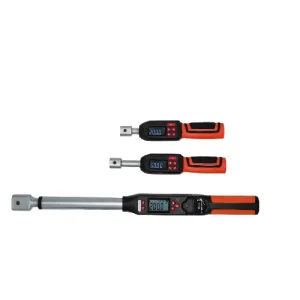
Interchangeable-Head Torque Wrench
An interchangeable-head system is useful for:
- Open-end fittings
- Hydraulic lines
- Pipes and tubing
- Restricted spaces
- Industrial machinery
- Custom assembly stations
The head interface, effective length, opening size, and maximum torque should all be confirmed before ordering.
Torque Wrench Set
A complete set may be more suitable for:
- Tool distributors
- Automotive repair shops
- Bicycle and motorcycle maintenance
- Mobile service teams
- Private-label retail programs
- Workshops needing multiple heads and accessories
YouBar’s torque wrench sets include 1/4-inch, 3/8-inch, and 1/2-inch configurations for different fastening ranges and applications.
Torque Multiplier
For large bolts that exceed the practical range of a standard hand wrench, buyers may require a torque multiplier.
Typical applications include:
- Heavy machinery
- Mining equipment
- Truck wheel nuts
- Wind-power maintenance
- Industrial flanges
- Steel structures
- Large mechanical assemblies
A multiplier should be selected according to its input drive, output drive, multiplication ratio, reaction-arm design, maximum output torque, and compatible input wrench.
Calibration Certificates Do Not Replace Interim Checks
A calibration certificate shows how the torque wrench performed during a test at a specific time.
It does not guarantee that the tool will remain unchanged until the next scheduled calibration.
Tool performance may be affected by:
- Dropping the wrench
- Overloading it
- Using it to loosen seized bolts
- Corrosion
- Dirt inside the mechanism
- Worn ratchet parts
- Incorrect storage
- Unauthorized adjustment
- High daily cycle counts
- Damaged interchangeable heads
An industrial torque-control plan may include:
- Incoming verification
- Scheduled calibration
- Daily or weekly functional checks
- Checks after impact
- Checks after overload
- Verification after repair
- Serial-number traceability
- Quarantine of suspect tools
The calibration interval should be based on:
- Usage frequency
- Application risk
- Manufacturer recommendations
- Customer requirements
- Quality-system rules
- Previous calibration history
A wrench used several times per month does not experience the same workload as a production tool completing hundreds of cycles per shift.
What Should Buyers Include in a Torque Wrench RFQ?
A useful RFQ should include more than the product name.
| RFQ item | Details to provide |
|---|---|
| Application | Automotive, machinery, pipeline, wind power, electronics, or assembly |
| Torque range | Minimum, maximum, and most-used torque |
| Tool type | Mechanical click, digital, preset, dial, or break-over |
| Accuracy | Required deviation and tightening direction |
| Drive size | 1/4, 3/8, 1/2, 3/4, or 1 inch |
| Head type | Ratchet, open end, box end, crowfoot, or interchangeable |
| Insert interface | Required rectangular insert dimensions |
| Torque units | N·m, lbf·ft, lbf·in, or kgf·cm |
| Usage rate | Cycles per shift or per day |
| Working environment | Indoor, outdoor, humid, dusty, or corrosive |
| Standard | Required testing or calibration standard |
| Documents | Test report, certificate, or declaration |
| Identification | Serial number, batch number, and calibration label |
| Branding | Logo, product color, case, labels, and private packaging |
| Quantity | Sample, trial order, or annual purchase volume |
| Destination | Country and delivery port |
For an interchangeable head, also specify:
- Fastener size
- Opening size
- Head type
- Insert interface
- Maximum torque
- Effective length
- Working clearance
- Required material or surface finish
How Should Buyers Evaluate a Torque Wrench Manufacturer?
Before placing an OEM or wholesale order, ask:
- Which torque ranges are available?
- What accuracy is declared?
- In which tightening direction is it specified?
- Which part of the range is covered?
- Is each wrench tested before shipment?
- Is an individual certificate available?
- Can serial numbers be added?
- Are preset tools available?
- Can the manufacturer provide interchangeable heads?
- Are effective head lengths documented?
- Are digital and mechanical options available?
- Can customized scales or torque units be supplied?
- What OEM branding options are available?
- What is the MOQ?
- What is the production lead time?
- How are calibration and warranty claims handled?
The right supplier should ask about the fastening application, target torque, daily workload, head access, certification needs, and destination market before recommending a tool.
Frequently Asked Questions
Is a ±2% torque wrench always better than a ±4% wrench?
Not automatically.
The correct choice depends on the application, working range, operating method, calibration requirements, and process risk.
A suitable ±4% tool used correctly may produce more reliable fastening than a ±2% tool used at the wrong range or with poor technique.
Does a calibration certificate guarantee correct bolt preload?
No.
The certificate verifies the tool’s torque output under calibration conditions. Bolt preload also depends on friction, lubrication, fastener coatings, joint geometry, and surface condition.
Do interchangeable heads change applied torque?
They can.
A head that changes the effective lever length may require a corrected wrench setting.
Does a straight socket extension change torque?
A straight extension aligned with the rotational axis normally does not change the handle’s effective lever length in the same way as an inline crowfoot. Operators should still follow the tool and accessory instructions.
Why do two operators get different results?
Possible causes include:
- Different hand positions
- Different pulling speeds
- Different responses to the click
- Different tightening sequences
- Different fastener conditions
- Different head orientations
- Repeated tightening of an already seated fastener
Should torque wrenches be checked between calibrations?
For frequent, high-risk, or production use, interim verification can help identify damage or drift before the next scheduled calibration.
Can a torque wrench control clamp force exactly?
No.
Torque control estimates preload indirectly. Variations in friction mean that identical torque values may not produce identical clamp force.
Which torque wrench is suitable for a production line?
Preset, fixed-value, break-over, or digitally controlled tools may reduce adjustment errors. The correct option depends on torque range, daily cycles, traceability, and fastening risk.
Build a Reliable Torque Process, Not Just a Tool List
Torque wrench accuracy is important, but it is only one part of reliable fastening.
A controlled process should address:
- Tool type
- Working torque range
- Calibration status
- Operator hand position
- Tightening speed
- Interchangeable-head geometry
- Fastener condition
- Lubrication
- Tightening sequence
- Interim verification and traceability
When requesting a quotation, provide YouBar with:
- Required torque range
- Accuracy
- Drive size
- Tool type
- Head configuration
- Application
- Daily cycle count
- Certification requirements
- Branding
- Quantity
- Destination market
Contact YouBar Tools to request a mechanical, digital, preset, interchangeable-head, torque wrench set, or torque multiplier recommendation for your industrial or OEM project.
Previous News
The Professional’s Guide to Mechanical Torque W...Next News
When a Digital Torque Wrench Warning Is Not EnoughFeature Product
-
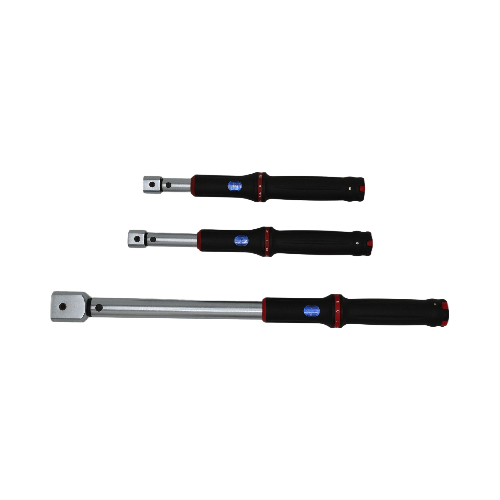 XS Series Interchangeable Head Window Style Cli...
TENGTUO ELECTRONIC TECHNOLOGY Item NO...
-
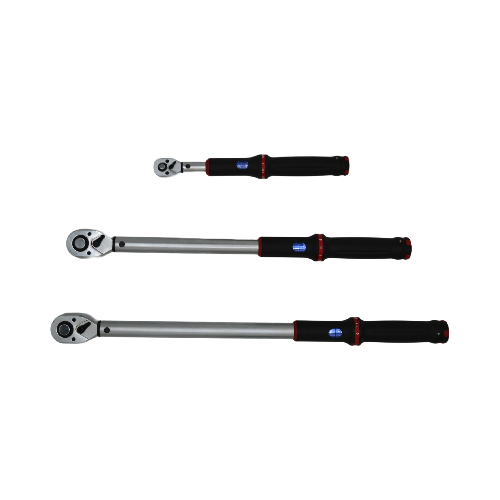 XS Series Window Style Click Torque Wrench
TENGTUO ELECTRONIC TECHNOLOGY Item NO...
-
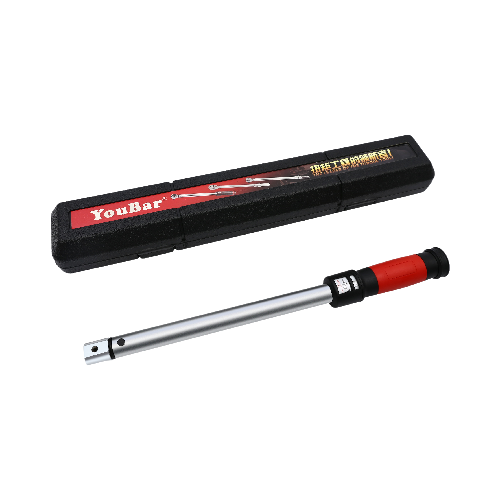 SL Series Interchangeable Head Window Style Cli...
TENGTUO ELECTRONIC TECHNOLOGY item NO...