
+86 18116360585
- English
- Chinese
- French
- German
- Portuguese
- Spanish
- Russian
- Japanese
- Korean
- Arabic
- Irish
- Greek
- Turkish
- Italian
- Danish
- Romanian
- Indonesian
- Czech
- Afrikaans
- Swedish
- Polish
- Basque
- Catalan
- Esperanto
- Hindi
- Lao
- Albanian
- Amharic
- Armenian
- Azerbaijani
- Belarusian
- Bengali
- Bosnian
- Bulgarian
- Cebuano
- Chichewa
- Corsican
- Croatian
- Dutch
- Estonian
- Filipino
- Finnish
- Frisian
- Galician
- Georgian
- Gujarati
- Haitian
- Hausa
- Hawaiian
- Hebrew
- Hmong
- Hungarian
- Icelandic
- Igbo
- Javanese
- Kannada
- Kazakh
- Khmer
- Kurdish
- Kyrgyz
- Latin
- Latvian
- Lithuanian
- Luxembou..
- Macedonian
- Malagasy
- Malay
- Malayalam
- Maltese
- Maori
- Marathi
- Mongolian
- Burmese
- Nepali
- Norwegian
- Pashto
- Persian
- Punjabi
- Serbian
- Sesotho
- Sinhala
- Slovak
- Slovenian
- Somali
- Scots Gaelic
- Shona
- Sindhi
- Sundanese
- Swahili
- Tajik
- Tamil
- Telugu
- Thai
- Ukrainian
- Urdu
- Uzbek
- Vietnamese
- Welsh
- Xhosa
- Yiddish
- Yoruba
- Zulu
- Kinyarwanda
- Tatar
- Oriya
- Turkmen
- Uyghur


When you're facing a rusted-on industrial bolt or a massive lug nut on heavy machinery, a standard wrench often hits its physical limit. You could use a massive cheater bar, but that’s dangerous and imprecise.
This is where the Torque Multiplier becomes your best friend. In this guide, we’ll break down how this mechanical marvel works and why it’s a safer, more efficient alternative for high-torque applications.

What is a Torque Multiplier?
A torque multiplier is a geared device used to increase the torque applied by an operator. By using a planetary gear system, it allows you to output a high amount of torque while using a relatively small input force.
For example, with a 5:1 ratio multiplier, applying 100 ft-lb of pressure at the handle results in 500 ft-lb of output at the nut (minus a small percentage for gear friction).
How Does a Torque Multiplier Work? (The Science)
At the heart of every torque multiplier is a planetary gear set. This consists of a sun gear, planet gears, and an internal ring gear.
-
Input: You turn the input drive with a standard torque wrench.
-
Multiplication: The gears rotate, trading speed for power.
-
Reaction: The reaction arm braces against a stationary object to counteract the force, ensuring the torque goes into the bolt, not the operator.
Key Benefits: Why Not Just Use a Long Bar?
While a "cheater bar" (extending the handle of a wrench) is a common DIY fix, it’s often a safety hazard. Here’s why a multiplier is superior:
-
Safety First: No more jumping on long bars or risking a "snap-back" injury.
-
Precision: When paired with a calibrated torque wrench, you can achieve exact specifications that a long bar can't measure.
-
Space-Saving: Multipliers are compact. They fit into tight engine bays or industrial pipe flanges where a 6-foot bar cannot.
-
No Power Needed: Unlike hydraulic or pneumatic tools, a manual torque multiplier works anywhere—no hoses, no batteries, no noise.
Choosing the Right Multiplier: The "Ratio" Factor
Not all multipliers are created equal. You need to consider two main specs:
-
The Torque Ratio: Common ratios are 3:1, 5:1, or even 25:1. Always account for frictional loss (usually 5-10%). If you need 1000 Nm and have a 4:1 tool, don't expect exactly 250 Nm input; aim for slightly higher.
-
Max Output Capacity: Never exceed the rated capacity of the tool, or you risk shattering the internal gears.
Pro Tips for Safe Operation
-
Steady the Reaction Arm: Ensure the reaction arm is securely braced against a solid surface. This is the most common point of failure for beginners.
-
Don't Use Impact Wrenches: Never use an air impact wrench on the input side of a manual multiplier. The "hammering" action will destroy the planetary gears instantly.
-
Maintenance: Keep the gears lubricated and check for metal shavings periodically.
Conclusion: Is a Torque Multiplier Worth It?
If you work on heavy equipment, trucks, or industrial piping, a torque multiplier isn't just a luxury—it’s a safety requirement. It turns a two-person, high-risk job into a one-person, precision task.
Looking for a reliable tool to handle your toughest bolts? [Link: Browse our Professional Torque Multiplier Series].
Previous News
A Beginner’s Guide to Torque Wrenches: Pr...Next News
Maximizing Industrial Efficiency with Interchan...Feature Product
-
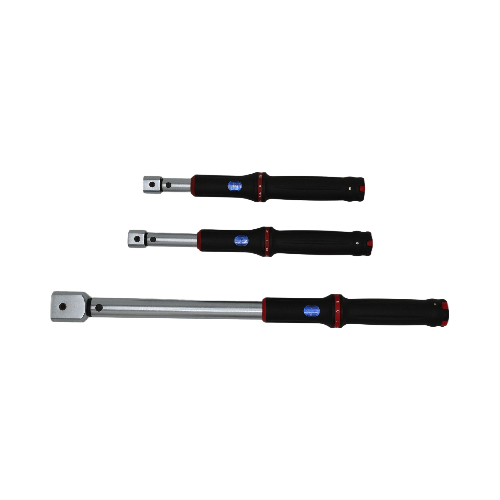 XS Series Interchangeable Head Window Style Cli...
TENGTUO ELECTRONIC TECHNOLOGY Item NO...
-
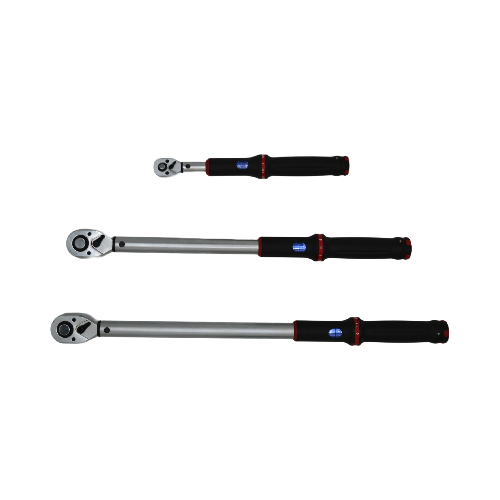 XS Series Window Style Click Torque Wrench
TENGTUO ELECTRONIC TECHNOLOGY Item NO...
-
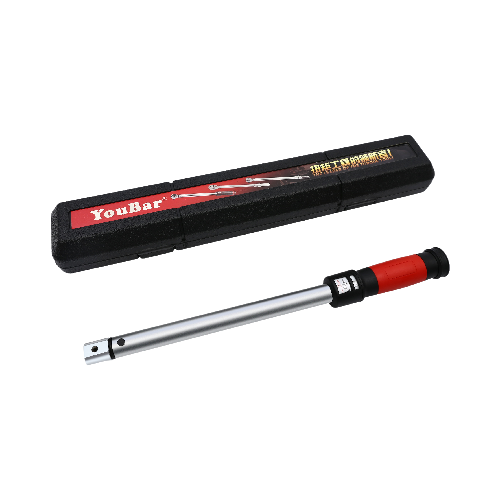 SL Series Interchangeable Head Window Style Cli...
TENGTUO ELECTRONIC TECHNOLOGY item NO...