
+86 18116360585
- English
- Chinese
- French
- German
- Portuguese
- Spanish
- Russian
- Japanese
- Korean
- Arabic
- Irish
- Greek
- Turkish
- Italian
- Danish
- Romanian
- Indonesian
- Czech
- Afrikaans
- Swedish
- Polish
- Basque
- Catalan
- Esperanto
- Hindi
- Lao
- Albanian
- Amharic
- Armenian
- Azerbaijani
- Belarusian
- Bengali
- Bosnian
- Bulgarian
- Cebuano
- Chichewa
- Corsican
- Croatian
- Dutch
- Estonian
- Filipino
- Finnish
- Frisian
- Galician
- Georgian
- Gujarati
- Hausa
- Hawaiian
- Hebrew
- Hmong
- Hungarian
- Icelandic
- Igbo
- Javanese
- Kannada
- Kazakh
- Khmer
- Kurdish
- Kyrgyz
- Latin
- Latvian
- Lithuanian
- Luxembou..
- Macedonian
- Malagasy
- Malay
- Malayalam
- Maltese
- Maori
- Marathi
- Mongolian
- Burmese
- Nepali
- Norwegian
- Pashto
- Persian
- Punjabi
- Serbian
- Sesotho
- Sinhala
- Slovak
- Slovenian
- Somali
- Samoan
- Scots Gaelic
- Shona
- Sindhi
- Sundanese
- Swahili
- Tajik
- Tamil
- Telugu
- Thai
- Ukrainian
- Urdu
- Uzbek
- Vietnamese
- Welsh
- Xhosa
- Yiddish
- Yoruba
- Zulu
- Kinyarwanda
- Tatar
- Oriya
- Turkmen
- Uyghur


Why Can a Digital Torque Wrench Drift Out of Calibration Before Its Scheduled Interval?
Direct Answer: A digital torque wrench can require verification or recalibration before its scheduled date after a drop, impact, overload, repair, abnormal reading, heavy usage, poor storage, contamination, or environmental exposure. Calendar time is only one control. Industrial users should quarantine the tool after a significant event, perform an approved verification test, review its history, and release it only when acceptance criteria are met.
This troubleshooting guide is intended for industrial assembly plants, automotive and aviation maintenance teams, energy and rail workshops, equipment service organizations, calibration departments, and tool distributors. Their risk is not merely an inaccurate display. Undetected torque drift can affect controlled bolting, create rework, invalidate production records, increase warranty exposure, and allow questionable joints to remain in service. Buyers can review Youba’s industrial torque tool product range while building a model-specific calibration and verification plan.
When Should a Digital Torque Wrench Be Removed From Service Immediately?
A scheduled calibration date does not authorize continued use after an event that could change tool performance. The first decision is whether the wrench should remain in production, be checked locally, or be sent for formal calibration or repair.
Quarantine the tool when any of the following occurs:
- The wrench is dropped, struck, crushed, or transported without adequate protection.
- The operator applies torque beyond the approved joint value or the tool’s stated limit.
- The wrench is used as a breaker bar, impact tool, or general-purpose ratchet.
- The display, buttons, ratchet, head, battery compartment, or housing behaves abnormally.
- A verification test falls outside the organization’s acceptance limit.
- The tool returns from repair, component replacement, or an unexplained period outside tool control.
- Corrosion, liquid ingress, chemical contamination, excessive dust, or severe temperature exposure is suspected.
- Production data or joint inspection indicates a possible systematic tightening error.
A frequent maintenance mistake is allowing the wrench to remain in service because it still powers on and displays a plausible value. Electronic operation does not prove torque measurement remains acceptable. The correct action is to control the tool by serial number, record the incident, prevent further use, and apply the site’s approved verification or calibration procedure.
Why Is a Calendar Interval Not Enough to Control Torque Drift?
A calendar interval assumes tools experience comparable conditions over time. Industrial torque tools rarely do. One wrench may complete a small number of controlled joints in a clean inspection room, while another is used across multiple shifts near its upper capacity, carried between work areas, exposed to oil and dust, and shared by many operators.
Calibration planning should therefore consider both time and events:
| Control Input | What It Reveals | Why Calendar Time Alone Can Miss the Risk |
|---|---|---|
| Usage cycles | How frequently the ratchet, sensing system, controls, and accessories are used. | Two tools of the same age may have completed very different numbers of tightening operations. |
| Duty severity | Whether the wrench normally operates at moderate values or repeatedly near its stated capacity. | Heavy duty can create more wear or overload exposure within the same number of months. |
| Incident history | Drops, impacts, overloads, repairs, abnormal readings, and storage failures. | A significant event can occur immediately after a successful scheduled calibration. |
| Verification trend | Whether interim readings remain stable or show movement over time. | A tool can show progressive change before the next planned calibration date. |
| Joint criticality | The consequence of an incorrect tightening result. | High-risk joints may justify tighter verification and release controls than general maintenance work. |
| Operating environment | Exposure to temperature changes, moisture, dust, oil, chemicals, and vibration. | Environmental stress is not reflected by elapsed time alone. |
Another buyer mistake is copying one calibration interval across every torque tool without considering model, application, frequency, storage, and customer requirements. A risk-based interval should be supported by tool history and verification results, not shortened or extended merely to reduce administrative work.
What Can a Drop or Shock Event Change?
A dropped wrench may show no visible damage while internal alignment, the sensing system, the ratchet, connectors, battery contacts, display, or housing has been affected. The appropriate response depends on the event and the buyer’s quality procedure, but continued production without a check is difficult to justify for controlled joints.
After a dropped wrench event:
- Identify the tool by model and serial number.
- Record the date, height or severity if known, surface, attached socket or head, and visible condition.
- Remove the battery or isolate the tool if damage, heat, leakage, or electrical abnormality is observed.
- Inspect the drive, ratchet, head connection, housing, controls, and display.
- Perform the approved verification test across relevant points and directions.
- Send the tool for calibration or repair when the result is outside limits, the incident is severe, or the procedure requires it.
- Assess whether joints tightened after the incident need review.
The hidden cost is often not the wrench itself. If the incident time is unknown, the buyer may have to identify every product tightened since the last confirmed check. Serial-number issue records and shift-start or job-start verification can substantially reduce the size of that investigation.
How Do Overload and Near-Limit Use Affect Calibration Control?
Overload is not limited to an obvious attempt beyond maximum capacity. Repeated operation near the upper limit, sudden operator overshoot, using long uncontrolled extensions, or using the wrench to loosen seized fasteners can expose the tool to conditions outside its intended tightening process.
Industrial teams should distinguish three situations:
| Situation | Required Review | Typical Procurement or Process Error |
|---|---|---|
| Confirmed overload | Quarantine, document, verify, and calibrate or repair according to the tool-control procedure. | The operator is given no alternative tool for a joint close to or above the wrench’s approved capacity. |
| Repeated work near maximum | Review tool selection, cycle frequency, operator technique, and verification trend. | The buyer selected one high-capacity tool to cover every joint without evaluating normal duty. |
| Unknown event or abnormal feel | Treat the tool as suspect until the condition is investigated and acceptance is demonstrated. | No incident-reporting rule exists, so operators continue using a tool that feels different. |
A buzzer or LED can help an operator approach the target, but feedback does not eliminate overshoot, incorrect unit selection, excessive pull speed, poor grip position, or misuse. Youba’s article on why a digital torque wrench warning alone may not control the joint provides a related process-control perspective.
How Should Usage Cycles Be Recorded?
Exact electronic cycle counting is not available or required in every tool-control system. The buyer can still create a practical usage classification based on issue records, shift frequency, joint quantity, department, and duty level.
A workable record can include:
- Tool model and serial number
- Assigned department, work cell, or mobile service team
- Primary joint families and normal torque band
- Approximate cycles per shift, week, or maintenance event
- Frequency of operation near the upper end of the approved range
- Operators or custodians responsible for the tool
- Verification dates, points, directions, and results
- Drop, impact, overload, repair, battery, and storage incidents
- Calibration results and adjustments
A high-use wrench should not be managed like an emergency spare that remains in a controlled cabinet. Conversely, an unused tool should not automatically be considered reliable after a long storage period. Battery condition, corrosion, storage environment, and verification status still need review before release.
Can Storage Conditions Cause a Digital Torque Wrench to Become Unreliable?
Poor storage can affect mechanical condition, electronics, batteries, accessories, and future verification results. The storage procedure should follow the exact product instructions rather than applying a universal rule copied from another wrench type.
For example, a mechanical click wrench may have a specific unloading or minimum-setting instruction. A digital wrench may use a different sensing and adjustment design. Buyers should not assume that every digital model must be stored using the same setting rule as a conventional mechanical wrench. The supplier’s model-specific shutdown, battery, and storage instructions should control.
Good storage practice normally includes:
- Using the supplied or approved protective case
- Removing heavy sockets or inserts before loose transport
- Preventing sustained load on the drive or head
- Protecting the tool from moisture, dust, chemicals, and corrosive atmospheres
- Avoiding uncontrolled high or low temperatures
- Following the specified battery-removal or battery-maintenance procedure for long storage
- Keeping the serial number, accessories, and documentation together
- Verifying the wrench before return to critical service after extended or questionable storage
One hidden purchasing cost is inadequate packaging. A low-priced tool shipped or stored in an unsuitable case can be exposed to more impact and accessory movement than a complete set designed around controlled transport. When evaluating a packaged option, buyers can review the 12-piece 1/2-inch drive digital torque wrench set and confirm the exact included tools, protective packaging, operating range, and documentation for the quoted configuration.
How Do Temperature, Contamination, and Corrosion Enter the Decision?
A digital torque wrench should be used and checked under conditions compatible with the exact model and the buyer’s procedure. Rapid temperature changes, condensation, water, oil, dust, metal particles, chemicals, and corrosion can affect operation or make the tool unsafe to release without inspection.
Industrial teams should define:
- The acceptable operating and storage environment for the exact model
- How tools acclimate after moving between hot, cold, or humid locations
- Cleaning methods that do not damage the display, controls, seals, or markings
- What contamination requires quarantine rather than routine wiping
- How corrosion on the drive, head interface, battery contacts, or housing is handled
- Whether field tools need more frequent verification than tools used in controlled assembly areas
A specification mistake occurs when a buyer requests only torque range and accuracy while omitting the actual work environment. The supplier cannot recommend packaging, accessories, storage, or verification support responsibly without knowing whether the tool will be used in a clean assembly cell, mobile service vehicle, outdoor energy project, or heavy-maintenance workshop.
When Is In-House Verification Enough, and When Is Calibration Required?
Verification and calibration serve different purposes. An in-house verification test can show whether the wrench remains within the buyer’s acceptance criteria at selected points. Calibration provides a documented comparison and result according to the applicable procedure and scope. Verification can trigger action, but it does not automatically replace calibration required by the buyer’s quality system, customer, contract, or regulation.
| Situation | In-House Verification | Calibration or Repair Decision |
|---|---|---|
| Routine pre-use or periodic check | Useful when performed with an approved device, method, trained operator, and recorded acceptance limit. | Required when the result fails, trends toward the limit, or the procedure requires scheduled calibration. |
| Minor incident with no visible damage | May provide initial evidence, depending on the organization’s risk rule. | Escalate when the incident is significant, results are inconsistent, or joint criticality demands it. |
| Confirmed overload, repair, or component replacement | Useful as a screening step but may not be sufficient for release. | Follow the formal calibration or repair-release procedure. |
| Failed verification | Repeat only when the procedure permits and after checking the verification setup. | Quarantine the wrench and arrange calibration, adjustment, or repair. |
| Customer or quality-system requirement | Can support interim control. | The required documented calibration scope remains mandatory. |
The verification device also requires control. A wrench cannot be credibly checked using a device with unknown status, unsuitable capacity, incorrect fixtures, or an undocumented method. The buyer should define verification points that reflect the wrench’s actual work, including the direction used in production.
What Does a Representative Calibration-Drift Incident Look Like?
Scenario: Event-based tool control in a three-shift industrial assembly plant. This is a representative application scenario, not a claimed Youba customer case.
Business Background: The plant uses serial-controlled digital torque wrenches for controlled mechanical joints. Each wrench has a scheduled calibration date, but only some work cells perform routine interim verification.
Problem: A wrench is found on the floor at the start of the morning shift. It powers on, shows no obvious damage, and is still within its scheduled calibration interval. Production wants to continue because the replacement tool is in another department.
Cause: The existing procedure controls calendar dates but does not clearly define drop events, quarantine responsibility, verification points, product review after an unknown incident, or access to backup tools.
Solution: The plant quarantines the wrench, records the event, performs an approved verification, identifies the last confirmed good check, and reviews joints completed since that point. It then introduces event-based triggers, shift-start checks for critical cells, serial-number issue records, and backup-tool coverage.
Buyer Decision Value: Purchasing now evaluates tools together with protective cases, spare coverage, verification compatibility, serial control, documentation, and recalibration support. A slightly higher acquisition cost is accepted when it reduces investigation scope, production interruption, and the risk of releasing questionable joints.
What Should Buyers Verify When Comparing Digital Torque Wrench Suppliers?
A calibration-ready purchase requires more than an accuracy statement. The buyer should ask the supplier to confirm the exact model, torque range, direction, feedback, drive or head, supplied documentation, packaging, battery requirements, incident guidance, and after-sales route.
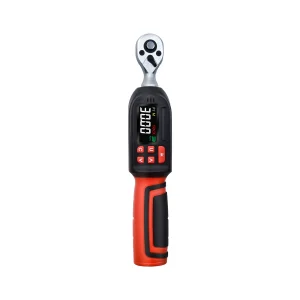
Youba lists a ratchet digital torque wrench with ±2% stated accuracy, buzzer, and LED flash. Buyers should verify the exact range, direction, drive size, calibration or inspection documentation, storage instructions, supplied case, and service scope for the model included in the quotation rather than applying the product name to every configuration.
Supplier comparison should address:
- Whether documentation is model-specific or generic
- How serial numbers are controlled
- Which torque points and directions are included in supplied records
- What the user should do after a drop, overload, repair, or failed verification
- Whether replacement tools, spare parts, batteries, heads, and cases are available
- How OEM labeling, manuals, packaging, and distributor requirements are handled
- What recalibration or technical-support route is available at the destination
What Should a Calibration and Incident Record Include?
| Record Field | Required Information | Decision Supported |
|---|---|---|
| Tool identity | Brand, model, serial number, range, drive or head, department, and custodian. | Confirms which physical tool and configuration the record covers. |
| Application | Joint family, normal torque, direction, frequency, and criticality. | Shows whether verification and calibration points match actual use. |
| Incident | Date, event type, operator, known severity, attached accessory, visible condition, and last known good check. | Defines quarantine, product-review, and escalation scope. |
| Verification | Device identity, status, method, points, direction, results, limits, operator, and disposition. | Supports release, continued quarantine, or calibration. |
| Calibration or repair | Date, provider, received condition, results, adjustment, repair, certificate or report, and next review date. | Provides traceability for return to service. |
| Production impact | Jobs or serial numbers affected, review performed, disposition, and corrective action. | Limits the risk of leaving questionable joints in service. |
Frequently Asked Questions
Can a digital torque wrench lose calibration after one drop?
It can become suspect after a drop even when no damage is visible. Quarantine the wrench, document the event, inspect it, and follow the approved verification or calibration procedure before returning it to controlled work.
Should a wrench be recalibrated every time it is dropped?
The required response depends on incident severity, tool design, joint criticality, verification results, and the organization’s procedure. A scheduled date should never be used to ignore a significant drop or failed check.
Does passing one verification point prove the complete range is acceptable?
Not necessarily. One point may not represent the torque values and directions used in production. Verification points should reflect the actual application and the approved method.
Can frequent use cause torque drift before the due date?
Heavy usage, repeated near-limit operation, ratchet wear, impacts, contamination, and other duty conditions can justify earlier verification or calibration. Track usage severity and results instead of relying only on elapsed time.
Should a digital torque wrench be stored at its minimum setting?
Follow the instructions for the exact model. Do not automatically apply a mechanical click-wrench storage rule to every digital wrench, because sensing and adjustment designs can differ.
Is in-house verification the same as calibration?
No. Verification checks whether the tool meets an internal acceptance rule at selected points. Calibration provides documented measurement results under the applicable scope. Verification does not replace required calibration.
What information should be included in a supplier RFQ?
Provide the torque range, normal working values, directions, drive or head, environment, usage level, verification plan, documentation needs, quantity, OEM requirements, packaging, destination, and required support after drops, overloads, or failed checks.
Request a Calibration-Ready Configuration Review
Provide the intended torque values, tightening directions, drive or interchangeable-head requirements, usage frequency, work environment, verification method, documentation scope, quantity, OEM packaging needs, destination, and after-sales expectations through Youba’s contact and quotation page. The team can review available digital torque wrench configurations, identify missing tool-control requirements, discuss samples and documentation, and prepare a quotation with the proposed products, packaging, support scope, assumptions, and exclusions.
Previous News
How Should Industrial Buyers Choose a Digital T...Next News
Which 1/2-Inch Digital Torque Wrench Setup Prev...Feature Product
-
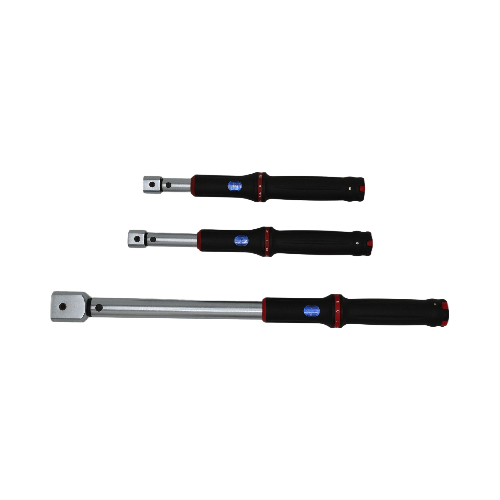 XS Series Interchangeable Head Window Style Cli...
TENGTUO ELECTRONIC TECHNOLOGY Item NO...
-
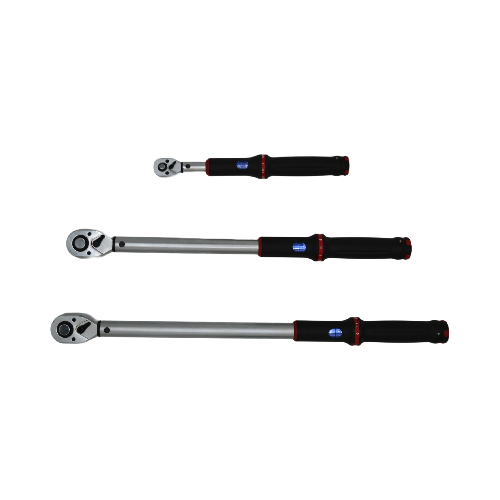 XS Series Window Style Click Torque Wrench
TENGTUO ELECTRONIC TECHNOLOGY Item NO...
-
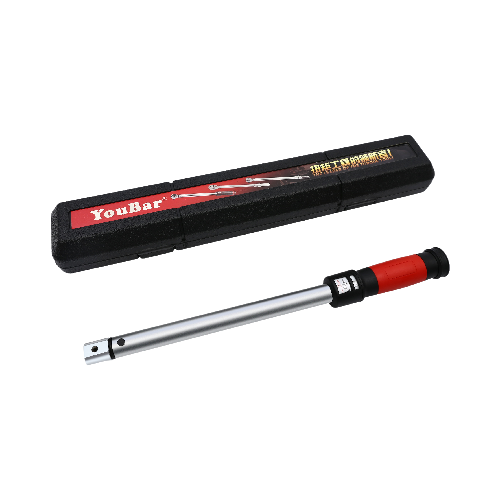 SL Series Interchangeable Head Window Style Cli...
TENGTUO ELECTRONIC TECHNOLOGY item NO...