
+86 18116360585
- Chinese
- French
- German
- Portuguese
- Spanish
- Russian
- Japanese
- Korean
- Arabic
- Irish
- Greek
- Turkish
- Italian
- Danish
- Romanian
- Indonesian
- Czech
- Afrikaans
- Swedish
- Polish
- Basque
- Catalan
- Esperanto
- Hindi
- Lao
- Albanian
- Amharic
- Armenian
- Azerbaijani
- Belarusian
- Bengali
- Bosnian
- Bulgarian
- Cebuano
- Chichewa
- Corsican
- Croatian
- Dutch
- Estonian
- Filipino
- Finnish
- Frisian
- Galician
- Georgian
- Gujarati
- Haitian
- Hausa
- Hawaiian
- Hebrew
- Hmong
- Hungarian
- Icelandic
- Igbo
- Javanese
- Kannada
- Kazakh
- Khmer
- Kurdish
- Kyrgyz
- Latin
- Latvian
- Lithuanian
- Luxembou..
- Macedonian
- Malagasy
- Malay
- Malayalam
- Maltese
- Maori
- Marathi
- Mongolian
- Burmese
- Nepali
- Norwegian
- Pashto
- Persian
- Punjabi
- Serbian
- Sesotho
- Sinhala
- Slovak
- Slovenian
- Somali
- Samoan
- Scots Gaelic
- Shona
- Sindhi
- Sundanese
- Swahili
- Tajik
- Tamil
- Telugu
- Thai
- Ukrainian
- Urdu
- Uzbek
- Vietnamese
- Welsh
- Xhosa
- Yiddish
- Yoruba
- Zulu
- Kinyarwanda
- Tatar
- Oriya
- Turkmen
- Uyghur


Direct answer: when should a production buyer choose digital or click?
Why should the comparison start with the assembly cell?
Product labels do not describe the work. A high-repeat station tightening one joint all day has different control needs from a mixed-model station or maintenance bench. Start by documenting joint count, torque targets, cycle volume, operator movement, PPE, noise, lighting, access and model changeovers. Then compare tools against those conditions.
The torque wrench category provides the relevant product families, while separate digital display torque wrench and mechanical torque wrench pages allow buyers to narrow the configuration. The category name is only the start; the selected model and its verified functions determine suitability.
| Assembly condition | Click option | Digital option | Evidence to request |
|---|---|---|---|
| One stable torque target, high repetition | Can offer simple mechanical operation | May add display or electronic feedback | Line-trial cycle results and setting-control method |
| Frequent torque changes | Requires disciplined resetting and confirmation | May simplify reading or preset selection if the model supports it | Model-specific setting and preset functions |
| Noisy work area | Audible click may be difficult to hear; tactile response must be tested | Visual or other feedback may help if confirmed | Operator trial with normal PPE and noise |
| Limited lighting or line of sight | Does not depend on reading a display during pull | Display visibility and feedback must be checked | Trial in actual position and lighting |
| Battery restrictions or remote work | No battery dependency | Requires a defined power and spare-battery plan | Operating procedure and battery support plan |
| Electronic records required | Needs a separate recording workflow | Only suitable if the selected model’s recording/export functions are confirmed | Demonstrated function and sample data workflow |
How does operator feedback change the decision?
Click feedback is commonly described as simple, but it is not automatically unmistakable. Noise, gloves, awkward posture, slow pulling technique and low settings can change how an operator perceives the release. A digital tool may provide a display, buzzer or LED indication where those functions are listed for the selected model, but operators can still miss a signal when the screen is out of sight or concentration is divided.
For this reason, feedback should be tested by the actual operator in the actual posture. The trial should record whether the signal is noticed consistently, whether the operator stops correctly and whether the tool remains readable or controllable throughout the cycle. Training needs are part of tool cost, not an afterthought.
What do repetition, presets and model changeovers mean for tool choice?
A fixed or tightly controlled setting can reduce adjustment activity at a stable station. Where the process frequently changes between products, the buyer must assess how settings are selected, confirmed and protected from accidental changes. Do not assume that every digital wrench provides the same preset or lockout functions, and do not assume that an adjustable click wrench will remain correctly set without a documented control step.
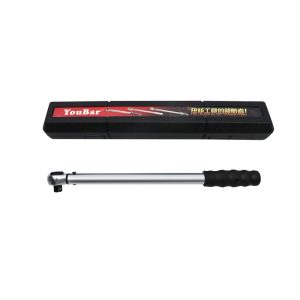
A fixed-value ratchet click torque wrench can be evaluated for a dedicated target, while a ratchet digital torque wrench can be reviewed where its confirmed display and feedback functions fit the cell. The buyer should compare the exact models, not generic technology claims.
Which power, display and sensor dependencies must be planned?
Mechanical click tools avoid batteries and displays, but they still require correct storage, handling, setting and periodic verification. Digital tools add electronic dependencies that production planning must address. Buyers should define battery availability, replacement practice, startup checks, display readability, storage conditions and the response to damaged or abnormal indications.
A hidden cost appears when the tool is selected without a support process. Production can be interrupted by missing batteries, uncontrolled settings, unavailable verification equipment or unclear quarantine rules. Include these workflow costs when comparing the initial quotation.
Which functions are standard, optional or model-specific?
Procurement documents should separate required functions from desirable options. “Digital” does not automatically mean that a wrench stores results, exports data, connects to production software or provides complete traceability. Likewise, “click” does not prove that every operator will receive the same audible or tactile cue in every application.
| Requirement | Procurement status | How to verify |
|---|---|---|
| Torque range, drive and direction | Required application specification | Compare model data with joint list and test the sample |
| Visual, audible or tactile feedback | Required only where the cell needs it | Demonstrate the selected model in line conditions |
| Preset or setting lock | Required or optional by process risk | Confirm model function and operator procedure |
| Result memory or data export | Unverified unless explicitly documented | Request a live demonstration and sample output |
| Calibration or verification document | Define in the RFQ | Check document identity against sample and batch |
| Batch labeling and packaging | Commercial acceptance requirement | Approve a packaging sample and identification fields |
How should buyers run a representative line trial?
- Select representative joints: Include the highest-volume joint, the most restricted access and at least one changeover condition.
- Use normal operators and PPE: A laboratory demonstration cannot reproduce line noise, gloves, reach or takt pressure.
- Freeze the setup: Record model, drive, socket, extension, setting and direction.
- Define the pass criteria: Include correct setting, feedback recognition, access, repeated operation, abnormal-result handling and required evidence.
- Compare workflow time: Include setting confirmation, changeover, battery handling and record completion—not only the tightening pull.
- Retest after training: Separate unfamiliarity with a new tool from a true process mismatch.
- Link sample to batch: Put the approved configuration, documents, labeling and packaging in the purchase specification.
One successful sample does not prove batch consistency. Incoming inspection should confirm the agreed model, range, drive, functions, identification, documents and packaging against the approved sample record.
What should factories and distributors include in the comparison RFQ?
- Joint list, torque targets and tightening direction
- Cycle volume and model-change frequency
- Operator PPE, noise, lighting and access constraints
- Required feedback modes
- Preset or setting-control requirements
- Data recording or export marked as mandatory, optional or not required
- Battery and power-support expectations
- Drive, head, socket, adapter and extension interfaces
- Sample-trial method and acceptance criteria
- Requested verification documents, batch labels and packaging
Frequently asked questions
Is a digital torque wrench always more accurate than a click wrench?
No. Accuracy must be compared using the stated specification, range and verification evidence for the exact models. Tool choice should also consider the complete assembly workflow.
Is a click wrench better for high-volume repetitive assembly?
It can fit a stable, repetitive station, but buyers should test feedback, setting control, access and verification under normal line conditions.
Does every digital torque wrench record or export tightening data?
No. Treat memory, export and connectivity as model-specific functions that require documentation and demonstration.
Can operators hear a click wrench in a noisy factory?
Not reliably in every case. Trial the tool with actual noise, PPE, posture and torque settings, and assess tactile as well as audible feedback.
Which tool is better for frequent model changeovers?
The better option is the one whose confirmed setting, preset and verification workflow controls changeovers with acceptable risk and effort. Test both candidates.
What should be checked when the batch arrives?
Confirm the approved model, range, drive, required functions, identification, documents, packaging and representative operating results.
Can one tool type cover production and maintenance?
Possibly, but only if both workflows have compatible joints, access, feedback, setting and evidence needs. Separate approved configurations are often clearer.
Request a production-cell configuration review
For a useful comparison, provide the joint list, torque values, cycle volume, changeover frequency, operator environment, required feedback, data requirements, drive and socket interfaces, sample quantity and acceptance method. Jiangsu Youba Hardware Tools can review suitable digital and click configurations and prepare samples or a quotation for your evaluation. Send the application details through the project evaluation contact page.
Previous News
Which 1/2-Inch Digital Torque Wrench Setup Prev...Next News
What Accuracy Evidence Should Buyers Check Befo...Feature Product
-
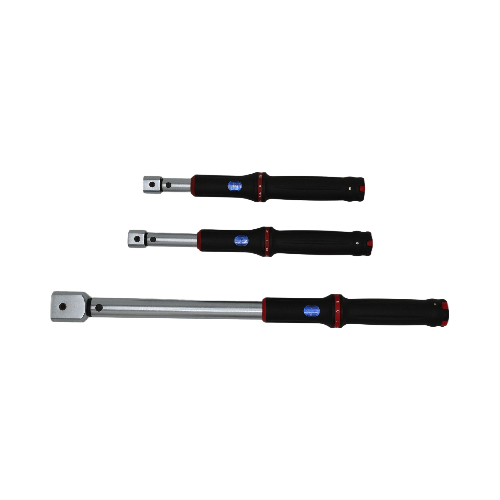 XS Series Interchangeable Head Window Style Cli...
TENGTUO ELECTRONIC TECHNOLOGY Item NO...
-
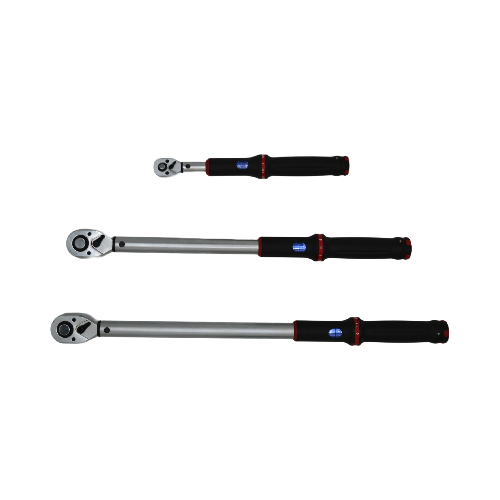 XS Series Window Style Click Torque Wrench
TENGTUO ELECTRONIC TECHNOLOGY Item NO...
-
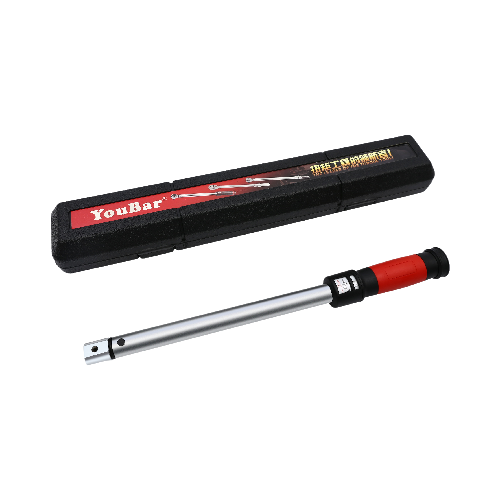 SL Series Interchangeable Head Window Style Cli...
TENGTUO ELECTRONIC TECHNOLOGY item NO...