
+86 18116360585
- Chinese
- French
- German
- Portuguese
- Spanish
- Russian
- Japanese
- Korean
- Arabic
- Irish
- Greek
- Turkish
- Italian
- Danish
- Romanian
- Indonesian
- Czech
- Afrikaans
- Swedish
- Polish
- Basque
- Catalan
- Esperanto
- Hindi
- Lao
- Albanian
- Amharic
- Armenian
- Azerbaijani
- Belarusian
- Bengali
- Bosnian
- Bulgarian
- Cebuano
- Chichewa
- Corsican
- Croatian
- Dutch
- Estonian
- Filipino
- Finnish
- Frisian
- Galician
- Georgian
- Gujarati
- Haitian
- Hausa
- Hawaiian
- Hebrew
- Hmong
- Hungarian
- Icelandic
- Igbo
- Javanese
- Kannada
- Kazakh
- Khmer
- Kurdish
- Kyrgyz
- Latin
- Latvian
- Lithuanian
- Luxembou..
- Macedonian
- Malagasy
- Malay
- Malayalam
- Maltese
- Maori
- Marathi
- Mongolian
- Burmese
- Nepali
- Norwegian
- Pashto
- Persian
- Punjabi
- Serbian
- Sesotho
- Sinhala
- Slovak
- Slovenian
- Somali
- Samoan
- Scots Gaelic
- Shona
- Sindhi
- Sundanese
- Swahili
- Tajik
- Tamil
- Telugu
- Thai
- Ukrainian
- Urdu
- Uzbek
- Vietnamese
- Welsh
- Xhosa
- Yiddish
- Yoruba
- Zulu
- Kinyarwanda
- Tatar
- Oriya
- Turkmen
- Uyghur


For fastening tasks between 0 and 10 N·m, choose a digital torque wrench by matching the actual tightening target to the tool’s published working range—not by looking only for “0–10 Nm” in a product name. A 0–10 N·m application range does not mean a wrench must measure accurately at zero torque. It means the project may include relatively small positive torque settings, each of which must fall inside the selected tool’s supported range.
For example, a wrench rated 0.3–6 N·m may suit a 5 N·m target but does not cover a 9 N·m target. A 0.6–12 N·m wrench has a published range that includes both. That is only the first check: the required tightening tolerance, clockwise or counter-clockwise use, square drive, working clearance and evidence for the specific model also matter. This guide explains those decisions using torque ranges listed on YOUBAR’s website, without treating the listed figures as independent test results.
What Does a 0–10 Nm Torque Requirement Mean?
The expression digital torque wrench 0-10 nm can describe a buyer’s intended operating band, rather than the exact markings on a wrench. “0” is usually the lower boundary of a requested range, not a useful instruction to tighten a fastener to zero. The assembly specification should provide actual, positive target values—for example, 2, 5 or 9 N·m—and any permitted tolerance.
Before choosing a wrench, write down the smallest and largest target torques you will actually apply. If a production task includes 0.5 N·m and 10 N·m, an instrument whose lower bound is 0.6 N·m would not cover the complete task, even if its maximum is 12 N·m. Conversely, a maximum rating of 30 N·m does not by itself mean the instrument performs better for a 2 N·m joint.
Which Digital Torque Wrench Range Should You Choose?
YOUBAR’s ratchet digital torque wrench product page lists the following YBS variants. These values are manufacturer-page specifications, not independently verified performance measurements.
| Listed model | Published range | Square drive | What the range alone tells you |
|---|---|---|---|
| YBS-06 | 0.3–6 N·m | 1/4 in | Includes 5 N·m; excludes 9 and 10 N·m |
| YBS-12 | 0.6–12 N·m | 1/4 in | Includes 5, 9 and 10 N·m; excludes 0.5 N·m |
| YBS-30 | 1.5–30 N·m | 3/8 in | Includes 5 and 9 N·m; excludes 1 N·m |
These comparisons are about published endpoints, not proof of acceptable tightening results. A target near either end of a wrench’s range calls for particular attention to the accuracy statement and applicable verification data. Also compare the square-drive size with your available sockets: a 3/8-inch drive is not automatically interchangeable with a 1/4-inch drive.
How Accurate Does a Low-Torque Digital Wrench Need to Be?
Accuracy requirements should begin with the joint specification. The product page lists ±2% clockwise and ±2.5% counter-clockwise for the YBS models shown. Those are published claims associated with the listing; they do not establish accuracy at every possible setting, under every operating condition, or for a separately supplied tool. Ask what quantity the percentage refers to, which torque points were checked, and whether the evidence applies to the model and direction of use.
Do not confuse accuracy with display resolution. A screen that shows several digits can make a reading easy to view without establishing that the applied torque matches it within the same number of decimal places. Similarly, a warning light or buzzer indicates that the instrument has detected a preset threshold; it is not a substitute for calibration or correct handling.
What Else Matters Besides Torque Range?
Drive Size and Socket Compatibility
Match the wrench’s square drive to the socket and fastener. The website lists 1/4-inch drives for YBS-06 and YBS-12, and a 3/8-inch drive for YBS-30. Confirm the actual socket interface and check whether an adapter would add clearance or configuration issues. Drive size alone does not determine accuracy.
Display, Units and Torque Alerts
The listed ratchet digital torque wrench family describes PEAK and TRACK modes, preset torque values, multiple units, and audible/visual alerts. These can be useful where operators alternate between target values, but the required setting and workflow should be verified for the selected instrument. Set N·m explicitly if the tightening specification is in N·m, and confirm which mode the procedure requires.
Working Clearance and Tool Configuration
A compact target torque does not guarantee easy access to the fastener. Check the tool head, handle sweep, socket length and nearby obstructions. If a fixed ratchet head cannot reach the joint, an interchangeable-head digital torque wrench may offer another configuration to investigate; however, the compatibility of a particular head and any required length correction must be confirmed before use.
How Can Buyers Compare Two Low-Torque Options?
Consider a hypothetical assembly process with separate 5 N·m and 9 N·m settings. The YBS-06 published range covers 5 N·m but not 9 N·m; the YBS-12 published range covers both. YBS-30 also covers both settings numerically, but it has a different square-drive size and a higher minimum torque. This does not make YBS-12 an automatic winner—it simply gives the buyer a sensible shortlist for verifying accuracy, socket fit and operator access.
| Comparison question | Why it matters |
|---|---|
| Are all actual targets inside the stated range? | Prevents selecting a tool outside its listed operating band |
| Is direction-specific accuracy documented? | Avoids applying a clockwise claim to reverse operation |
| Does the drive and head reach the joint? | Checks complete fastening configuration, not just the display |
| Which modes and units are needed? | Aligns instrument settings with the assembly instruction |
| Can the supplier identify model-specific evidence? | Supports a technically meaningful purchasing decision |
What Should Be Confirmed Before Ordering?
Prepare the target torque values and tolerances, tightening direction, fastener/socket dimensions, available working space, planned usage frequency, essential digital functions and any specific inspection or calibration documentation your quality system requires. If you are purchasing for several assembly stations, indicate whether all stations use identical targets or need different models. Quantity, packaging and customization requirements can be discussed after the technical configuration has been defined.
To review the models shown on YOUBAR’s site against a specific application, send the required torque values, drive size and intended setup to YOUBAR. Request confirmation for the exact model rather than assuming one product-page statement applies to the entire range.
Frequently Asked Questions
Can a 0.6–12 Nm wrench be used for a 10 Nm fastener?
Ten N·m falls inside that published range. Whether the wrench is acceptable for the joint still depends on the tightening tolerance, direction, configuration and evidence for the selected instrument.
Is a 0–10 Nm wrench the same as a 1–10 Nm wrench?
No. A stated minimum of 1 N·m would exclude lower target values such as 0.5 N·m. Check actual specifications rather than shorthand search terms.
Is a smaller square drive always better for low torque?
No. Socket fit, target torque, clearance and tool verification should determine the choice. A smaller drive by itself does not prove better accuracy.
Do digital torque alerts guarantee accurate tightening?
No. Alerts support the operating workflow, but calibrated measurement, correct setup, appropriate technique and an acceptable joint procedure remain essential.
Bottom line: For 0–10 N·m applications, define the real torque targets first, shortlist models whose published ranges contain them, then verify accuracy claims and the complete tool configuration before ordering.
Previous News
How to Use a Digital Torque Wrench: Setup, Tigh...Next News
Digital Torque Wrench Accuracy at 20–100 Nm: Wh...Feature Product
-
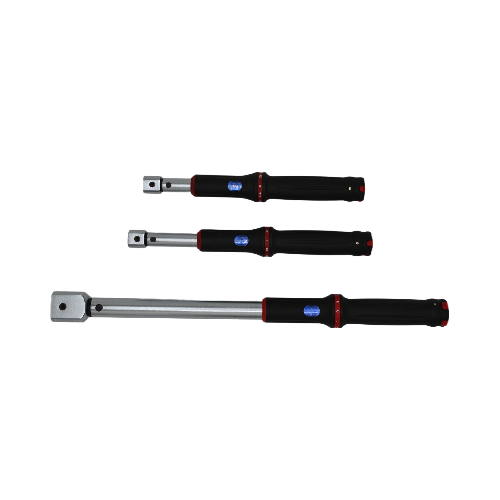 XS Series Interchangeable Head Window Style Cli...
TENGTUO ELECTRONIC TECHNOLOGY Item NO...
-
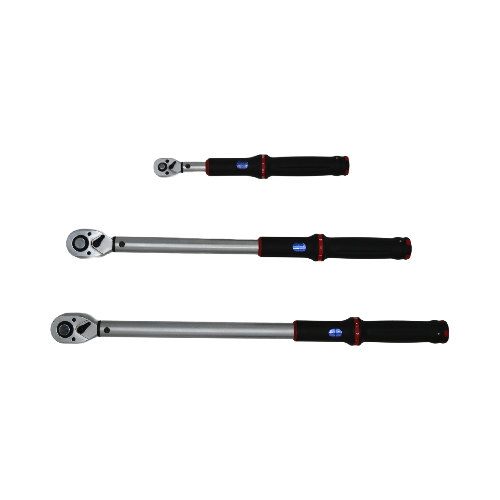 XS Series Window Style Click Torque Wrench
TENGTUO ELECTRONIC TECHNOLOGY Item NO...
-
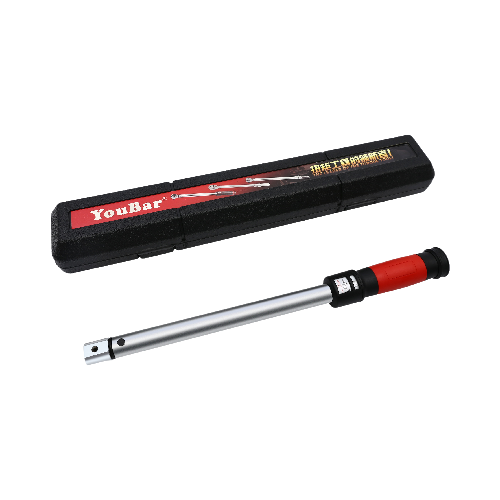 SL Series Interchangeable Head Window Style Cli...
TENGTUO ELECTRONIC TECHNOLOGY item NO...