
+86 18116360585
- English
- Chinese
- French
- German
- Portuguese
- Spanish
- Russian
- Japanese
- Korean
- Arabic
- Irish
- Greek
- Turkish
- Italian
- Danish
- Romanian
- Indonesian
- Czech
- Afrikaans
- Swedish
- Polish
- Basque
- Catalan
- Esperanto
- Hindi
- Lao
- Albanian
- Amharic
- Armenian
- Azerbaijani
- Belarusian
- Bengali
- Bosnian
- Bulgarian
- Cebuano
- Chichewa
- Corsican
- Croatian
- Dutch
- Estonian
- Filipino
- Finnish
- Frisian
- Galician
- Georgian
- Gujarati
- Haitian
- Hausa
- Hawaiian
- Hebrew
- Hmong
- Hungarian
- Icelandic
- Igbo
- Javanese
- Kannada
- Kazakh
- Khmer
- Kurdish
- Kyrgyz
- Latin
- Latvian
- Lithuanian
- Luxembou..
- Macedonian
- Malagasy
- Malay
- Malayalam
- Maltese
- Maori
- Marathi
- Mongolian
- Burmese
- Nepali
- Norwegian
- Pashto
- Persian
- Punjabi
- Serbian
- Sesotho
- Sinhala
- Slovak
- Slovenian
- Somali
- Scots Gaelic
- Shona
- Sindhi
- Sundanese
- Swahili
- Tajik
- Tamil
- Telugu
- Thai
- Ukrainian
- Urdu
- Uzbek
- Vietnamese
- Welsh
- Xhosa
- Yiddish
- Yoruba
- Zulu
- Kinyarwanda
- Tatar
- Oriya
- Turkmen
- Uyghur


A digital torque wrench and a dial torque wrench can both measure applied torque, but they do not present the result in the same way. A digital tool converts the measurement into an electronic value on a screen and may add functions such as target alerts, peak capture, presets or stored readings. A dial torque wrench uses a mechanical pointer and graduated scale, and some models add a memory needle to retain the highest reading. The search phrase digital dial torque wrench can therefore be misleading: “digital” and “dial” normally describe different readout systems rather than one standard tool type.
For industrial buyers, the useful question is not which display looks more advanced. It is which readout, operating mode and documentation fit the actual fastening or inspection task. YOUBAR lists digital-display torque tools for industrial and automotive use, while its broader product description also refers to dial torque wrenches. This article keeps those categories separate and uses only verified digital product pages when discussing specific YOUBAR functions.
What Is the Difference Between a Digital and a Dial Torque Wrench?
The main difference is how the wrench shows torque to the operator. A digital torque wrench presents a numeric value on an electronic display. A dial torque wrench uses a pointer moving across a graduated dial. That difference affects how the operator watches the load, retains a result and works in different environments, but it does not by itself establish which tool is more accurate.
| Comparison Point | Digital Torque Wrench | Dial Torque Wrench |
|---|---|---|
| Primary readout | Numeric electronic display | Mechanical pointer and graduated dial |
| Live torque indication | Often shown continuously in a track or real-time mode, depending on model | Pointer movement can show the applied torque as load changes |
| Peak retention | May store or display a peak value electronically | Some models use a separate memory pointer; this is model-specific |
| Target warning | May use buzzer, LED, vibration or other alerts | Usually depends on visual reading unless the specific design adds another mechanism |
| Power | Requires a battery or other electrical power source | Mechanical dial indication does not require a battery |
| Additional functions | May include presets, unit switching, data storage or traceability features | Typically simpler; available functions depend on the actual model |
A buyer should therefore avoid interpreting “electronic dial torque wrench” as proof of a particular construction. If a supplier uses that wording, request a product drawing or photo and confirm whether the tool has a digital display, a mechanical dial, or another indicator arrangement.
How Do Live Readings and Peak Readings Differ?
Live Torque During Application
A live or track reading changes while the operator is applying force. It is useful when the task requires the operator to watch torque rise and control the pull before reaching the final target. The display can show the current applied torque, but the operator still needs suitable technique and enough time to respond to the reading or warning.
YOUBAR’s 12-piece 1/2-inch digital torque wrench set lists both TRACK and PEAK modes. The same product page also lists preset torque values, audible and visual alerts, four selectable torque units, a display, button locking and data storage. These functions belong to that documented product and should not be assumed for every digital torque wrench.
Peak Torque After Application
Peak mode retains the highest measured value reached during the fastening event. That is useful when the operator needs to check the maximum applied torque after the load is released. A mechanical dial wrench can provide a similar practical function if it has a dedicated memory needle, but not every dial tool includes one.
Peak torque should also be interpreted correctly. It reports the highest torque value measured by the wrench during that operation. It does not directly prove bolt preload, clamp force or joint quality. Thread condition, lubrication, fastener geometry, joint stiffness and operator technique can all affect the relationship between torque and the resulting joint condition.
Which Readout Is More Suitable for the Task?
Choose the readout by starting with the task, not with a preference for electronics or mechanics. A digital display is useful when the user needs a clear numeric result, selectable units, programmable targets or stored readings. A dial readout can be useful when the operator needs to observe torque movement directly without relying on batteries or electronic menus. The final choice still depends on the exact model and work process.
| Task Requirement | Feature to Consider | What Still Needs Confirmation |
|---|---|---|
| Watch torque rise continuously | Track/live digital display or easily readable dial | Display/dial visibility, working position and usable torque range |
| Review maximum torque after the pull | Digital peak mode or dial memory pointer | Whether the specific model actually includes peak retention |
| Warn operators near a target value | Programmable alert system on a digital model | Alert sequence, working environment and operator response |
| Record tightening values | Digital memory or data function | Storage capacity, recall/export method and traceability requirements |
| Work where battery management is undesirable | Mechanical dial design may be considered | Readability, range, direction and calibration documentation |
For repetitive industrial work, the buyer should also consider who reads the wrench, whether operators hand tools between shifts, whether results need to be retained, and whether warnings remain visible and audible in the real work area. These process questions often matter more than the word “digital” or “dial” in a product title.
Does a Digital Display Mean Better Accuracy?
No. A digital display does not automatically mean that a torque wrench is more accurate than a dial wrench. Display resolution, measurement accuracy and calibration status are different concepts.
- Resolution describes the smallest change the display or scale can show.
- Accuracy describes how closely the wrench output or indication matches the reference value under specified test conditions.
- Calibration or verification status describes whether the individual tool has been checked against an appropriate reference and under what conditions.
A screen that shows more decimal places can provide a finer displayed increment without proving better measurement accuracy. Likewise, a large analog dial can be easy to read but still requires the buyer to check the model’s stated accuracy, usable range and calibration information.
YOUBAR currently lists specific digital models with stated accuracy values. For example, its interchangeable-head digital torque wrench is presented as a digital-display product with buzzer and LED feedback and a model-specific accuracy claim. That value should remain tied to the documented model and test conditions; it should not be used as a blanket specification for all YOUBAR digital tools, mechanical tools or any unverified dial model.
What Should You Check in the Actual Product Specification?
Once the required readout style is clear, the buyer should turn the general comparison into a model-specific specification. Start by confirming whether the offered tool is genuinely digital, dial, click-type or another mechanism. Then check the technical fields that affect the actual job.
- Torque range: confirm the minimum, normal and maximum joint torque against the specific model’s stated working range.
- Drive or head interface: check square drive, interchangeable-head connection or insert format against the required sockets and access conditions.
- Tightening direction: confirm whether the published accuracy and operating functions apply clockwise, counterclockwise or both.
- Readout mode: verify whether the tool offers track, peak, residual or another named operating mode.
- Target feedback: confirm whether the model uses a display, buzzer, LED or other warning, and how the warning is triggered.
- Data function: if traceability matters, confirm whether values can be stored, recalled or exported rather than assuming that every digital wrench records data.
- Calibration evidence: request documentation appropriate to the application and verify the stated accuracy range and conditions.
- Power and operating environment: for digital tools, check battery requirements and whether the display and controls fit the intended working conditions.
Buyers can review YOUBAR’s digital torque wrench products to compare currently listed digital-display configurations. If a project specifically requires a mechanical dial torque wrench, request the exact model information rather than substituting a click-type wrench with a scale window or assuming that a digital display and a dial are equivalent.
Digital or Dial: A Practical Selection Rule
If the operator needs programmable targets, multiple units, warning feedback, stored values or electronic peak capture, a digital torque wrench is the more natural category to investigate. If the job prioritizes direct mechanical indication without battery dependence, a dial wrench may be worth considering, provided the actual model offers the required range, readability, direction and calibration evidence.
Neither category removes the need to define the joint first. Before ordering, record the target torque range, required direction, head or drive interface, access limits, preferred readout, whether peak retention is needed, whether data must be saved, and the required calibration documentation. These inputs make it possible to compare tools on the same basis instead of choosing by display type alone.
YOUBAR’s current verified online catalog provides multiple digital-display configurations, including ratchet and interchangeable-head options. For a model-specific selection, buyers can discuss torque tool requirements with YOUBAR and provide the required torque range, readout preference, drive or insert format, quantity and documentation requirements.
Previous News
What Does 90 Degrees Mean on a Torque Wrench?Next News
Digital Torque Wrenches for Lug Nuts: Selecting...Feature Product
-
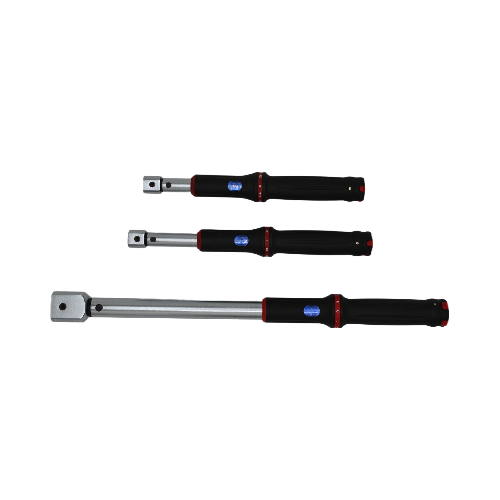 XS Series Interchangeable Head Window Style Cli...
TENGTUO ELECTRONIC TECHNOLOGY Item NO...
-
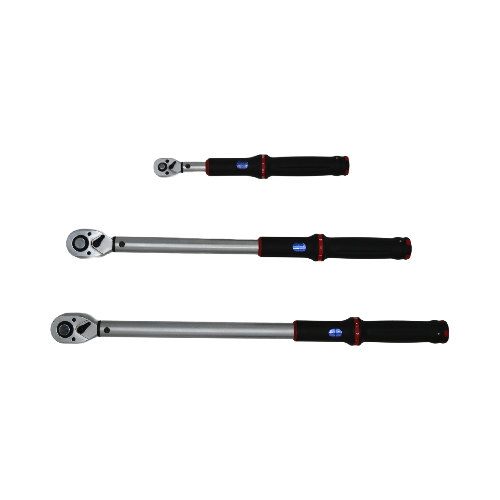 XS Series Window Style Click Torque Wrench
TENGTUO ELECTRONIC TECHNOLOGY Item NO...
-
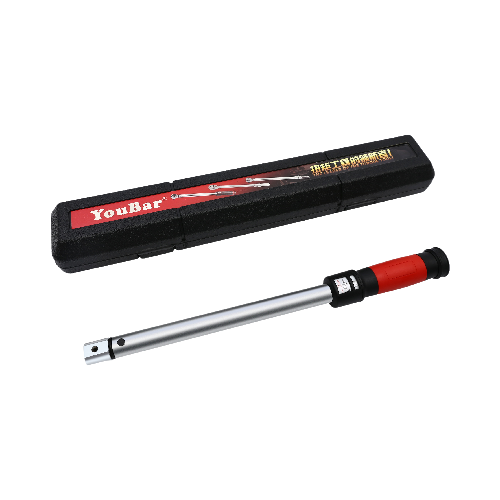 SL Series Interchangeable Head Window Style Cli...
TENGTUO ELECTRONIC TECHNOLOGY item NO...