
+86 18116360585
- English
- Chinese
- French
- German
- Portuguese
- Spanish
- Russian
- Japanese
- Korean
- Arabic
- Irish
- Greek
- Turkish
- Italian
- Danish
- Romanian
- Indonesian
- Czech
- Afrikaans
- Swedish
- Polish
- Basque
- Catalan
- Esperanto
- Hindi
- Lao
- Albanian
- Amharic
- Armenian
- Azerbaijani
- Belarusian
- Bengali
- Bosnian
- Bulgarian
- Cebuano
- Chichewa
- Corsican
- Croatian
- Dutch
- Estonian
- Filipino
- Finnish
- Frisian
- Galician
- Georgian
- Gujarati
- Haitian
- Hausa
- Hawaiian
- Hebrew
- Hmong
- Hungarian
- Icelandic
- Igbo
- Javanese
- Kannada
- Kazakh
- Khmer
- Kurdish
- Kyrgyz
- Latin
- Latvian
- Lithuanian
- Luxembou..
- Macedonian
- Malagasy
- Malay
- Malayalam
- Maltese
- Maori
- Marathi
- Mongolian
- Burmese
- Nepali
- Norwegian
- Pashto
- Persian
- Punjabi
- Serbian
- Sesotho
- Sinhala
- Slovak
- Slovenian
- Somali
- Scots Gaelic
- Shona
- Sindhi
- Sundanese
- Swahili
- Tajik
- Tamil
- Telugu
- Thai
- Ukrainian
- Urdu
- Uzbek
- Vietnamese
- Welsh
- Xhosa
- Yiddish
- Yoruba
- Zulu
- Kinyarwanda
- Tatar
- Oriya
- Turkmen
- Uyghur


In a “torque plus 90 degrees” instruction, 90° means turning the specified bolt or nut another quarter-turn after completing the prescribed initial torque stage. It is an angular movement, not a setting of 90 N·m, and it cannot be replaced by a universal torque value. The important questions are where that quarter-turn starts, what movement the measuring device counts, and whether the tool actually measures degrees. A click, a torque reading or a digital display alone does not establish the required rotation. The fastening procedure defines the target and sequence; the tool instructions define how the selected equipment measures them.
What Does “Torque Plus 90 Degrees” Actually Mean?
A Quarter-Turn of the Fastener, Not a Torque Setting
“What is 90 degrees on a torque wrench?” often comes from reading a workshop instruction that specifies torque first and angle second. A complete revolution is 360°, so 90° is one-quarter of a revolution. Imagine a reference moving from the 12 o’clock position to the 3 o’clock position in a clockwise direction. That illustrates the geometry; it is not a substitute for the measurement method required by the assembly procedure.
The instruction concerns the rotation of the specified fastener relative to its assembly. It does not mean that the wrench handle must finish horizontally, vertically or at a particular angle to the floor. The starting handle position may change with access, while the required additional fastener rotation remains the same.
Read both quantities with their units. A torque value such as a specified number of N·m or lbf·ft belongs to the torque stage. A value followed by the degree symbol belongs to an angular instruction. Adding 90 to the torque setting would change the requirement rather than carry it out.
Fastener Rotation Is Different from Adapter Position
The phrase “90 degrees” also appears in discussions of crowfoot adapters. There, it describes the adapter’s orientation relative to the wrench and its effect on the effective lever arm. That is a different problem from turning a bolt an additional quarter-turn.
Placing an adapter at a right angle does not measure bolt rotation or complete a torque-plus-angle step. Any torque-setting correction for an adapter must follow the geometry and instructions applicable to that combination. Keep adapter positioning and fastener rotation separate when reading the specification.
Where Does the 90-Degree Measurement Start?
Complete the Specified Initial Torque Stage
The word “plus” establishes the relationship between the stages. Where the procedure requires an initial torque followed by 90°, the additional angle starts from the condition established by that prescribed torque stage—not from when the bolt was first inserted or when it began to feel tight.
This distinction matters even when the final display reads exactly 90°. Starting the angle count too early includes movement that belongs to an earlier stage. Starting it late leaves part of the actual additional movement outside the record. The displayed number is meaningful only when its starting point matches the procedure.
Separate the process requirement from the instrument’s settings. A tool may have an angle-start threshold, a manually established zero or an integrated torque-plus-angle mode. A threshold used to begin recording is not automatically a replacement for the specified initial torque. Before use, establish how the selected mode defines its starting event and whether that event matches the fastening instruction.
Keep Separate Tightening Stages Separate
Consider this illustrative instruction, with no application-specific torque value assigned:
Prescribed initial torque → first additional 90° stage → second additional 90° stage
The two angle stages total 180° mathematically. That does not authorize combining them into a single operation. The original procedure may distribute each stage across a group of bolts in a stated sequence. Completing one bolt through every stage before moving to the next would then be a different procedure.
For a multi-fastener assembly, retain the distinction between the angle required for each stage and the progress of each fastener through the sequence. A record that says only “180° completed” does not establish whether two separately specified stages were followed correctly. Use the original work instruction to determine the order, any intermediate conditions and the required completion record.
Why 90 Degrees Cannot Be Converted into One Torque Value
A search for “90 degrees to N·m” asks for a fixed conversion between two different quantities. Angle describes rotation; torque describes the turning moment. To relate them for a particular fastening operation, the behavior of that specific joint must be known.
Joint stiffness is one reason the relationship changes. A short fastener clamping relatively rigid components can reach a target torque over a much smaller angle than a joint containing more compressible components. Consequently, the same additional rotation does not establish one universal increase in torque across different assemblies.
Angle also does not, by itself, identify the bolt’s material state. Angular information can be used in tightening processes that remain within the elastic region, as well as in specifically designed processes involving yield. A “plus 90°” instruction alone therefore does not determine whether the fastener is torque-to-yield or whether it may be reused.
The practical consequence is straightforward: do not replace the angle stage with a guessed higher torque setting. Retain the specified torque, angle, fastener condition and reuse requirements as separate parts of the approved procedure. A chart or calculator that provides one torque result from “90°” alone cannot establish the correct requirement for an unidentified joint.
How Is the 90-Degree Turn Measured?
Ratchet Return Strokes Do Not Equal Tightening Rotation
A ratcheting handle can move back to obtain another working stroke while the socket and fastener remain in position. That return movement is not additional tightening rotation. Counting all handle travel would therefore mix working movement with repositioning.
For a simple geometric example, two effective 45° tightening movements make 90° of fastener rotation. A return stroke between them does not add another 45° to that total. This example explains the quantity being measured; it is not an instruction to estimate the working strokes by eye.
Some electronic angle tools explicitly support accumulated measurement over multiple ratcheting sweeps. That behavior is a feature to establish from the selected tool’s instructions, not an assumption to make about every electronic wrench. Check what it retains after a return stroke, an interruption or repositioning before relying on a cumulative result.
Similarly, ratchet tooth count describes the mechanism; it is not a calibrated angle measurement record. Neither the number of audible ratchet clicks nor the release click of a torque wrench proves that the fastener has completed its required quarter-turn.
Use the Right Reference and Measurement Mode
A torque wrench angle gauge and an electronic angle-measuring tool establish the angular reference in different ways. For an external gauge, its reference arrangement must remain as required by its instructions. For an electronic tool, its initialization, measurement mode and start conditions must be correct. A readable scale or screen does not resolve an incorrectly established reference.
Before the operation, determine what happens if the tool must be removed from the fastener or its reference is disturbed. Treat a retained number and a valid retained measurement as separate questions. A number can remain visible without proving that the entire required movement has been measured continuously from the correct starting point.
Paint marks and a clock-face analogy can help explain or communicate position. They should not replace a specified measuring method merely because a quarter-turn seems easy to recognize. The acceptance requirement decides what evidence is sufficient. This distinction is especially useful in repetitive assembly, where the next shift may need to understand exactly which stage has been completed.
Can Your Torque Wrench Measure Degrees?
A Torque Reading Is Not an Angle Reading
A click-type torque wrench responds to a torque setting. A torque-only electronic wrench displays torque and may provide an audible or visual alert. Neither description, on its own, establishes torque wrench angle measurement capability.
When evaluating a torque wrench that measures degrees, look for a documented angle function rather than a display, a buzzer or the word “digital.” The relevant information includes how angle is initialized, what movement is accumulated and how the result is verified. Torque and angle accuracy are separate specifications; a torque calibration result alone does not establish angular accuracy.
| Tool arrangement | Role in a torque-plus-90° procedure | What must be established |
|---|---|---|
| Torque-only mechanical or electronic wrench | Controls or indicates the specified torque stage within its documented capability. | Suitable torque range, drive, direction and instructions. Its torque result does not prove an angle result. |
| Torque tool with a separate angle-measurement arrangement | Uses distinct methods for the initial torque and subsequent rotation. | A suitable driving tool, compatible interfaces, adequate load capacity and a valid angle reference. |
| Electronic tool with an explicitly documented angle or torque-plus-angle mode | Measures angular movement under the mode’s stated operating conditions. | Start conditions, accumulation behavior, operating limits and evidence covering angle measurement. |
Choose between these arrangements by the fastening procedure and access conditions, not by the assumption that one style is always superior. A separate gauge is useful only when the complete arrangement can be used as intended; an integrated display is useful only when the relevant mode and measurement behavior are documented.
Match the Product to Its Confirmed Function
Youba’s torque wrench range provides a starting point for evaluating the torque-control stage. The XS Series Window Style Click Torque Wrench is presented as a click-type torque tool with torque scales and model-specific ranges. Its published product information does not establish a built-in angle-measurement mode.
The same distinction applies when reviewing digital torque wrench options. Select an exact model against documented functions. Do not treat torque units, PEAK/TRACK readings or target alerts as evidence that a tool records degrees.
The subsequent angle stage can also require a different load capacity from the initial torque stage. Do not assume that a tool is adequately rated for the whole operation merely because it covers the initial setting. Use the driving tool and accessory arrangement permitted for the task; do not keep forcing a click wrench after release unless its manufacturer expressly permits the intended use.
Mistakes That Can Invalidate a 90-Degree Tightening Step
The most important errors concern what the result proves. A correct-looking value can still refer to the wrong starting point, an incomplete stage or the wrong fastener. The following comparison helps distinguish a measurement problem from an instruction to continue tightening.
| Situation | Why the result is insufficient | Required decision |
|---|---|---|
| The angle count begins before the prescribed torque stage ends. | The recorded quarter-turn includes movement outside the required angle stage. | Resolve the nonconforming sequence using the applicable work instruction rather than accepting the display alone. |
| The gauge reference moves or the cumulative reading is lost. | The remaining reading no longer establishes the complete rotation from the original starting point. | Use the instrument’s interruption instructions and the joint’s recovery procedure; do not guess the missing angle. |
| The target angle is exceeded. | Reversing by the apparent excess is not evidence that the prescribed loading history has been restored. | Follow the specified inspection, rework or replacement requirements rather than inventing a correction. |
| A wrench is clicked again after the angle stage as a “check.” | A later torque event does not reconstruct how much angular movement occurred in the preceding stage. | Use the acceptance method specified for the completed operation. |
These situations do not share one universal restart instruction. Where the procedure gives no recovery method, refer the nonconforming result to the responsible technical authority. Do not convert an uncertain angle into another arbitrary quarter-turn. For a critical connection, uncertainty about the completed stage is a process issue, not something a new display reading can automatically resolve.
Specify Torque and Angle Requirements Separately
A request for a “90-degree torque wrench” leaves the essential task unclear. For workshop purchasing or an assembly-tool enquiry, provide the actual instruction: the initial torque with units, the additional angle, the number of stages and any specified tightening sequence. That gives the supplier a process to evaluate rather than an ambiguous product phrase.
Include the fastener and drive interface, available clearance, tightening direction and whether the work must be completed through several ratcheting strokes. State any required measurement record or verification evidence. These details determine whether the proposed arrangement can reach the connection, maintain its reference and document the required result.
Ask the quotation to distinguish the torque tool, any separately supplied angle-measurement equipment, the permitted configuration and the supporting instructions. Do not assume that an accessory visible in an illustration is included, or that the torque tool’s documentation covers an independently supplied gauge.
Use Youba’s contact page to discuss the torque tool and any separate angle-measurement requirements. Provide the original fastening instruction so that the proposed model, supplied items and any remaining measurement needs can be stated clearly. The purchasing decision then addresses the actual requirement: a defined initial torque followed by a measured quarter-turn from the correct starting point.
Previous News
How to Compare Professional 1/2-Inch Digital To...Next News
Digital vs. Dial Torque Wrenches: What Is the D...Feature Product
-
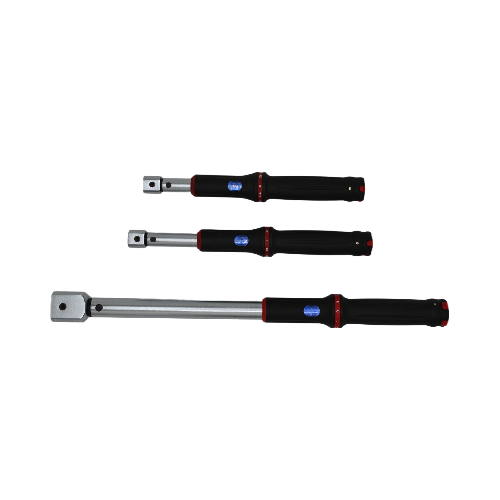 XS Series Interchangeable Head Window Style Cli...
TENGTUO ELECTRONIC TECHNOLOGY Item NO...
-
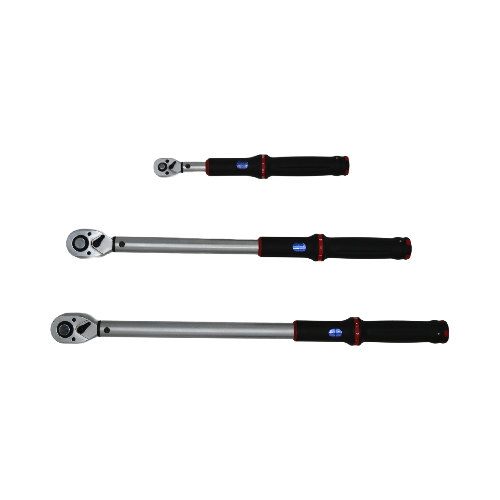 XS Series Window Style Click Torque Wrench
TENGTUO ELECTRONIC TECHNOLOGY Item NO...
-
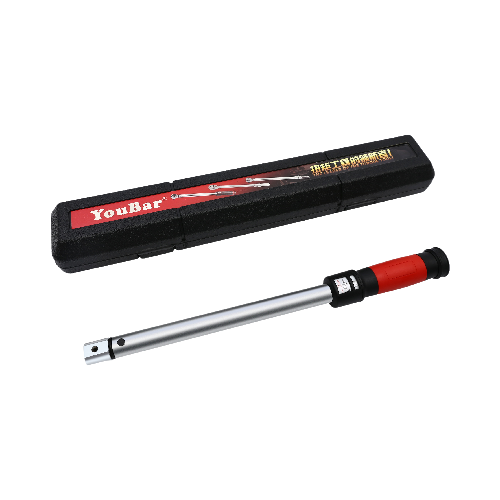 SL Series Interchangeable Head Window Style Cli...
TENGTUO ELECTRONIC TECHNOLOGY item NO...