
+86 18116360585
- Chinese
- French
- German
- Portuguese
- Spanish
- Russian
- Japanese
- Korean
- Arabic
- Irish
- Greek
- Turkish
- Italian
- Danish
- Romanian
- Indonesian
- Czech
- Afrikaans
- Swedish
- Polish
- Basque
- Catalan
- Esperanto
- Hindi
- Lao
- Albanian
- Amharic
- Armenian
- Azerbaijani
- Belarusian
- Bengali
- Bosnian
- Bulgarian
- Cebuano
- Chichewa
- Corsican
- Croatian
- Dutch
- Estonian
- Filipino
- Finnish
- Frisian
- Galician
- Georgian
- Gujarati
- Haitian
- Hausa
- Hawaiian
- Hebrew
- Hmong
- Hungarian
- Icelandic
- Igbo
- Javanese
- Kannada
- Kazakh
- Khmer
- Kurdish
- Kyrgyz
- Latin
- Latvian
- Lithuanian
- Luxembou..
- Macedonian
- Malagasy
- Malay
- Malayalam
- Maltese
- Maori
- Marathi
- Mongolian
- Burmese
- Nepali
- Norwegian
- Pashto
- Persian
- Punjabi
- Serbian
- Sesotho
- Sinhala
- Slovak
- Slovenian
- Somali
- Samoan
- Scots Gaelic
- Shona
- Sindhi
- Sundanese
- Swahili
- Tajik
- Tamil
- Telugu
- Thai
- Ukrainian
- Urdu
- Uzbek
- Vietnamese
- Welsh
- Xhosa
- Yiddish
- Yoruba
- Zulu
- Kinyarwanda
- Tatar
- Oriya
- Turkmen
- Uyghur


A digital ratchet torque wrench should be selected from the complete tightening setup rather than from maximum torque or stated accuracy alone. Before requesting a quotation, buyers should define the fastener or nut, required socket, working torque, square-drive size, available clearance, tightening direction, expected use pattern, required digital feedback, accuracy or inspection-document requirements, quantity and sample-approval conditions. A fixed ratchet-head digital wrench is most practical when the joint can be reached through a compatible socket and the ratchet head has enough space to operate. If the application instead requires open-end, flare-nut, crowfoot or another special access geometry, an interchangeable-head torque wrench may be a more appropriate product architecture.
Start With the Joint and Socket Workflow, Not the Wrench Model
The first question in a digital torque-wrench RFQ should be how the tool will physically engage the joint.
A torque value does not describe the working interface. Two applications may both require the same nominal torque but differ completely in access. One may use a conventional hex nut that can be reached with a standard socket. Another may sit beside a pipe, housing or structural obstruction that prevents a fixed ratchet head and socket from reaching the fastener.
Before choosing from Youba’s Digital Display Torque Wrench category, the buyer should identify:
- Fastener or nut size
- Available socket type and size
- Whether an extension or adapter is required
- Side and overhead clearance around the joint
- Normal tool orientation
- Whether the task is repetitive assembly, maintenance or mixed use
This creates the first decision path:
Joint geometry → socket access → ratchet-head feasibility → wrench selection.
If that path is not confirmed, a wrench can have the correct torque range and still be unusable at the actual workstation.
When Does a Fixed Ratchet Head Fit Better Than an Interchangeable Head?
A fixed ratchet-head digital wrench and an interchangeable-head digital wrench solve different access problems.
A fixed ratchet architecture is easier to specify when the application uses conventional socket access, the fastener geometry is repeatable and the ratchet head has enough room to move. The buyer can then control the drive size, socket and wrench as one defined setup.
An interchangeable-head system becomes more relevant when the joint cannot be reached with a normal socket arrangement. Hydraulic fittings, tubing connections, restricted piping, recessed fasteners or other constrained assemblies may require open-end, box-end, flare-nut or crowfoot-style inserts.
The important point is not that one architecture is universally better. The head configuration should follow the actual access condition.
A buyer who already knows that every production joint uses standard sockets may not need the added interface decisions of an interchangeable-head system. Conversely, a buyer with several inaccessible fittings should not force a fixed ratchet wrench into the project simply because its torque range matches.
Match the Square Drive and Socket to the Fastener
Once socket access is confirmed, the RFQ should define the complete drive chain.
Ratchet wrench → square drive → socket → fastener.
The current Youba ratchet digital torque-wrench family includes different square-drive sizes across its model range. That means a request for “one digital ratchet torque wrench” does not identify a single hardware interface.
The buyer should state the required drive size when it is already controlled by the plant or maintenance system. If the drive has not been selected, provide the fastener sizes and current socket inventory so the supplier can return the proposed configuration.
This is especially important when a factory has standardized socket systems. Introducing another square-drive size may require additional sockets, adapters and storage control even when the wrench itself meets the torque requirement.
Adapters and extensions should also be declared. Their presence can change the physical envelope and may require the complete setup to be rechecked against the joint and tightening procedure.
Select the Torque Range Around the Real Working Torque
Torque range remains an important selection variable, but it should support the application decision rather than become the entire article.
A useful RFQ should provide:
- Normal working torque
- Minimum required torque
- Maximum required torque
Youba’s current ratchet digital torque-wrench product family covers multiple models and torque ranges rather than one universal wrench. Buyers should therefore request the exact proposed model instead of approving an offer that says only “digital wrench available.”
The model should be selected around the real joint requirements. Choosing a tool only because it has the highest maximum torque may add unnecessary size or weight, while selecting a range without checking the lowest controlled joint can create another mismatch.
For projects containing several very different torque levels, separate wrench ranges may be more practical than forcing one model to cover every station.
Ratchet Clearance and Swing Space Must Be Checked at the Real Joint
A socket that fits the nut does not prove that the complete wrench can operate in the available space.
The ratchet head needs enough clearance for the head itself, socket, handle and required operating movement. Nearby pipes, housings, frames, guards or other components can block the tool even when the fastener remains visible.
Buyers should review:
- Side clearance around the ratchet head
- Overhead clearance above the fastener
- Available handle movement
- Nearby pipes, housings or structures
- Socket depth
- Extension or adapter length
- Operator access and hand position
Where clearance is tight, a photograph, section drawing or simple dimensioned sketch can be more useful than a long written description. The supplier can then evaluate the actual working envelope instead of guessing from the nut size.
Socket compatibility does not automatically mean workstation compatibility.
Confirm the Required Tightening Direction
The RFQ should also state whether the application requires clockwise tightening, counter-clockwise controlled operation or both.
The current Youba ratchet digital torque-wrench product page separates stated clockwise and counter-clockwise accuracy values. Buyers should therefore connect the requested accuracy to the direction actually used by the project rather than copying only one headline percentage.
The supplier response should identify:
- Quoted model
- Supported operating direction
- Stated accuracy for the relevant direction
- Inspection or calibration evidence included with the order
The purpose is not to turn this article into another accuracy guide. It is to prevent the buyer from approving a wrench whose quoted performance does not match the actual tightening direction.
Digital Feedback Should Match the Work Instruction
Digital functions should be selected from the operator workflow rather than treated as a feature-count competition.
The current Youba product family includes digital display, audible and visual target alerts, peak-hold and tracking modes, selectable torque units, preset positions and other operating functions. Buyers should identify which of those functions are required for the actual process and which are optional.
For example, a repetitive assembly station may value a clear target indication and controlled presets. A maintenance team working across several measurement systems may value easy unit switching. A distributor may prefer a broader general-purpose configuration.
The RFQ should distinguish:
Required function / Optional function / Not required.
Buyers should also avoid assuming functions that are not stated for the selected model. Bluetooth, wireless communication, app connectivity or automatic cloud data transfer should not be added to the specification unless the quoted product documentation specifically supports them.
Run a Representative Workstation Trial Before Bulk Approval
For a new assembly or maintenance application, a representative sample can verify more than appearance or display operation.
The trial should reproduce the actual joint, socket and working space as closely as practical.
| Trial Check | What the Buyer Should Verify | Why It Matters |
|---|---|---|
| Fastener access | Socket and ratchet head can reach the intended joint | Confirms that the fixed-head architecture fits the application |
| Clearance | Head and handle can move without colliding with surrounding equipment | Prevents a correct specification from becoming unusable at the station |
| Torque range | Actual joint torque falls within the selected model’s working range | Connects model selection to the real process |
| Square drive | Wrench, socket and any approved adapter fit correctly | Confirms the complete mechanical interface |
| Direction | Required tightening direction is supported and correctly documented | Connects tool performance to the actual procedure |
| Digital feedback | Display, buzzer and visual indication are usable in the workstation environment | Checks whether operator feedback supports the work instruction |
| Operator workflow | The wrench can be positioned and used repeatedly without awkward repositioning | Identifies practical problems before a bulk order |
| Documentation | Supplied records identify the model and evidence required by the buyer | Creates a controlled reference for later acceptance |
A successful sample should be recorded against the approved model and configuration. If the production order later changes the drive, torque range, digital-function scope or accessories, the original sample should not automatically be treated as approval for the revised setup.
What Accuracy and Calibration Evidence Should Be Requested?
Industrial buyers should define the evidence they expect rather than request a generic “certificate.”
A useful document package may need to identify:
- The quoted wrench model
- The tested torque range or points
- The relevant tightening direction
- The stated acceptance basis
- The inspection or calibration result
- The document date
- Model or serial-number linkage where required by the buyer
The buyer’s own quality system should determine how much documentation is required. A distributor selling general-purpose tools may have different requirements from a controlled production line or calibration-managed maintenance department.
A certificate name alone does not show what wrench, range or direction the document actually covers.
How Should Buyers Review Youba’s Ratchet Digital Torque Wrench?
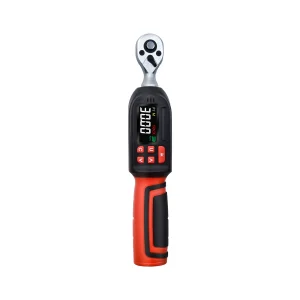
Youba’s Ratchet Digital Torque Wrench ±2% Accuracy with Buzzer and LED Flash product page provides the relevant product-family reference for this RFQ.
The current page lists multiple models across different torque ranges and drive sizes, with stated clockwise and counter-clockwise accuracy values. It also lists a 72-tooth ratchet, peak-hold and tracking modes, preset torque positions, multiple torque units, audible and visual alerts, a color display, button-lock functionality and data storage.
Those published features establish the product direction, but they do not select the buyer’s final wrench automatically.
The actual order still needs to confirm:
- Required working torque
- Selected model
- Square-drive size
- Socket requirement
- Joint clearance
- Tightening direction
- Required digital functions
- Inspection or calibration evidence
- Quantity and accessories
The product page should therefore support the project review rather than replace the RFQ.
What Makes a Digital Ratchet Torque Wrench RFQ Incomplete?
Several information gaps can make a technically valid product difficult to approve for the actual job:
- The inquiry states only maximum torque
- The required square-drive size is missing
- The socket size is not identified
- The buyer has not checked joint clearance
- Ratchet-head movement is ignored
- Tightening direction is not defined
- An adapter or extension is used but not declared
- Digital functions are listed without separating required and optional items
- The buyer asks for a calibration certificate without defining the required scope
- The sample configuration is not linked to the intended production order
These gaps should be resolved before suppliers are compared commercially. Otherwise, one supplier may make assumptions that another supplier does not, and the buyer can end up evaluating different working configurations.
When Should Buyers Choose Another Torque Wrench Architecture?
A fixed ratchet digital wrench is not the correct architecture for every controlled tightening task.
If the fastener requires open-end access, flare-nut access, crowfoot geometry or another special insert because a normal socket cannot reach the joint, an interchangeable-head torque wrench may be more appropriate.
The selection should also be reopened if the process requires a function that is not confirmed for the chosen ratchet model, such as a specific torque-angle workflow, special communication requirement or another controlled data process.
Procurement should not infer Bluetooth, wireless communication or other electronic functions from the general term “digital torque wrench.” Those capabilities need model-specific product evidence.
Standard socket access → evaluate fixed ratchet digital wrench;
special access geometry → evaluate interchangeable-head architecture;
special electronic process → verify a product specifically supporting that function.
Build the Final Digital Ratchet Torque Wrench RFQ Around the Workstation
A complete inquiry should give the supplier enough information to confirm both the wrench and the working interface.
- Application or joint description
- Fastener or nut size
- Normal working torque
- Minimum and maximum required torque
- Required square-drive size
- Socket size and type
- Adapter or extension if used
- Side and overhead clearance
- Required tightening direction
- Expected use pattern or operating frequency
- Required digital feedback functions
- Required torque units or presets where relevant
- Accuracy requirement
- Inspection or calibration-document requirement
- Sample or workstation-trial requirement
- Quantity
- Case, socket or accessory scope
- OEM, label or packaging requirements
- Destination
- Required declaration of deviations and alternatives
Ask the supplier to return each important item as Confirmed, Deviation, Alternative, Optional or Buyer Input Required. This creates a clearer approval record than a quotation containing only a model number, torque range and price.
Once the joint, ratchet architecture, drive, socket, torque range, digital-function requirements and evidence scope are controlled, buyers can submit the project through Youba’s contact and project inquiry form. The purchasing decision should be based on a wrench that fits the actual tightening station—not simply on the largest torque number or the longest list of digital features.
Previous News
What Should Buyers Verify When Comparing Torque...Next News
3/8-Inch Digital Torque Wrench Set Repeat Order...Feature Product
-
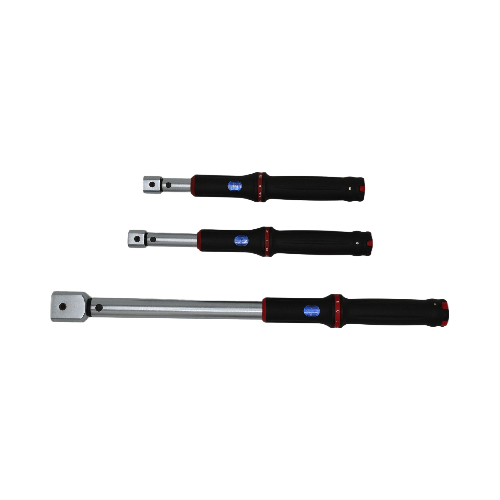 XS Series Interchangeable Head Window Style Cli...
TENGTUO ELECTRONIC TECHNOLOGY Item NO...
-
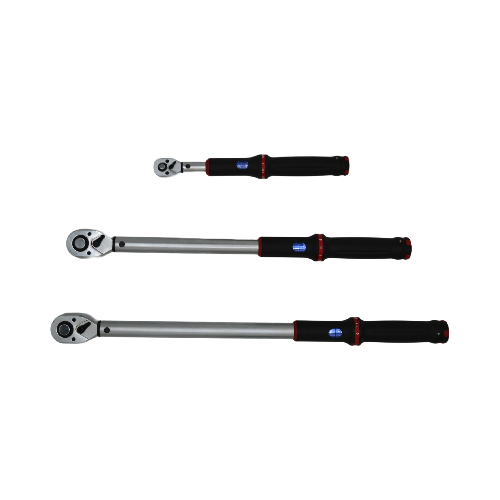 XS Series Window Style Click Torque Wrench
TENGTUO ELECTRONIC TECHNOLOGY Item NO...
-
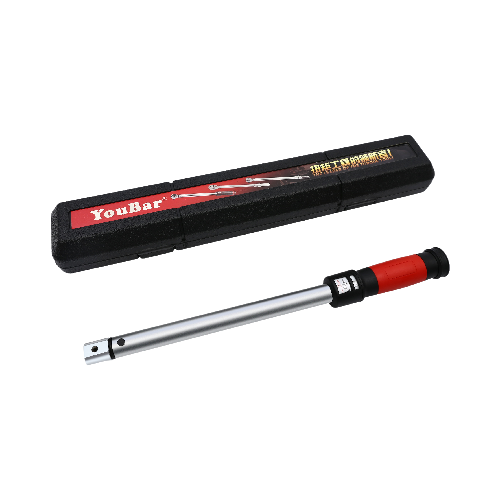 SL Series Interchangeable Head Window Style Cli...
TENGTUO ELECTRONIC TECHNOLOGY item NO...