
+86 18116360585
- English
- Chinese
- French
- German
- Portuguese
- Spanish
- Russian
- Japanese
- Korean
- Arabic
- Irish
- Greek
- Turkish
- Italian
- Danish
- Romanian
- Indonesian
- Czech
- Afrikaans
- Swedish
- Polish
- Basque
- Catalan
- Esperanto
- Hindi
- Lao
- Albanian
- Amharic
- Armenian
- Azerbaijani
- Belarusian
- Bengali
- Bosnian
- Bulgarian
- Cebuano
- Chichewa
- Corsican
- Croatian
- Dutch
- Estonian
- Filipino
- Finnish
- Frisian
- Galician
- Georgian
- Gujarati
- Haitian
- Hausa
- Hawaiian
- Hebrew
- Hmong
- Hungarian
- Icelandic
- Igbo
- Javanese
- Kannada
- Kazakh
- Khmer
- Kurdish
- Kyrgyz
- Latin
- Latvian
- Lithuanian
- Luxembou..
- Macedonian
- Malagasy
- Malay
- Malayalam
- Maltese
- Maori
- Marathi
- Mongolian
- Burmese
- Nepali
- Norwegian
- Pashto
- Persian
- Punjabi
- Serbian
- Sesotho
- Sinhala
- Slovak
- Slovenian
- Somali
- Scots Gaelic
- Shona
- Sindhi
- Sundanese
- Swahili
- Tajik
- Tamil
- Telugu
- Thai
- Ukrainian
- Urdu
- Uzbek
- Vietnamese
- Welsh
- Xhosa
- Yiddish
- Yoruba
- Zulu
- Kinyarwanda
- Tatar
- Oriya
- Turkmen
- Uyghur


Selecting a torque multiplier for a 1000 Nm bolting project requires more than matching the words “maximum output: 1000 Nm.” The buyer must confirm the required fastener torque, multiplier ratio, usable range of the input torque wrench, input and output square drives, reaction-arm geometry, working clearance, tightening direction, ratio accuracy and verification method. The multiplier, input wrench, socket and reaction point must be treated as one torque-transfer system. A valid RFQ therefore starts with the actual bolt target and installation envelope, then asks the supplier to confirm every interface and any deviation. Maximum output is a rating boundary; it is not automatically the preferred operating point or proof that the complete setup will achieve the required joint result.
Start With Required Bolt Torque, Not Multiplier Maximum Output
A project may require 600 Nm, 800 Nm or 1000 Nm at the fastener. Those are different duties even when the candidate multiplier carries a 1000 Nm maximum-output rating. Procurement should first obtain the approved torque target and unit from the drawing, bolting procedure or engineering specification.
Next, determine whether that target is a normal repetitive operating point, an occasional maintenance value or the upper boundary of the task. The answer affects the required input wrench, verification plan, operator effort and tool selection. A maximum rating should not be used as a default working instruction.
The buyer should also distinguish torque applied at the output square from the desired final joint condition. A multiplier transfers torque through a geared mechanism. It does not remove the effects of fastener condition, lubrication, joint design or tightening procedure. The procurement description should therefore state both the tool output requirement and the applicable bolting process.
At the product-discovery stage, review the available torque multiplier family, but shortlist a model only after the target and operating envelope are known.
How Does the Multiplication Ratio Affect Input Torque?
A nominal 3.3:1 ratio describes the relationship between input and output torque. It helps estimate the input level needed from the driving torque wrench. However, dividing the required output by 3.3 is only the beginning of the selection process.
The complete logic is:
Required Output → Multiplier Ratio → Required Input Range → Actual Ratio Accuracy → Verification
For a nominal 1000 Nm output, the simple ratio calculation produces an input near 303 Nm before considering the product’s ratio accuracy and the performance of the input tool. That value is useful for range screening, not as a complete tightening instruction. The supplier or buyer’s engineering function should provide the approved setting method and verification basis for the actual system.
If the target output changes, the required input changes as well. The input wrench must cover all planned settings in its applicable operating range. Buyers should request a target-by-target input table or approved method rather than relying on mental arithmetic at the job site.
The Input Torque Wrench Must Fit the Multiplier
The input wrench is not an interchangeable afterthought. Procurement must confirm:
- the multiplier’s input square drive;
- the square drive on the proposed torque wrench;
- the required input torque for each output target;
- the usable and verified range of the input wrench;
- the required tightening direction;
- the physical fit and approved interface between both tools.
The target Youba model has a 1/2-inch input drive. A buyer proposing a different drive size should not casually add an adapter without reviewing capacity, fit, length, clearance and the approved setup. Each extra interface introduces another component that must be rated, controlled and included in the trial.
Input-wrench accuracy and calibration scope also remain relevant. A multiplier cannot improve an unsuitable or uncontrolled input signal. The quotation should identify whether the input wrench is included, recommended separately or supplied by the buyer.
Output Drive and Socket Selection Are a Separate Interface
The output side has its own requirements. The target model uses a 3/4-inch output square, so the buyer must match that square to a socket suitable for the fastener and duty. Confirm the fastener size, socket type, square drive, torque rating, length, wall profile and access.
A correct input setup can still fail at the job if the output socket does not reach the fastener, interferes with surrounding structure or requires an unapproved adapter. Long extensions and unusual socket arrangements can also change clearance and reaction geometry. They should be disclosed before approval rather than improvised during commissioning.
The RFQ should state whether the socket is included in the supply package. If the buyer supplies it, include its key dimensions and rating in the system review.
Why Is the Reaction Arm Part of the Torque Specification?
A multiplier creates reaction torque that must be supported. The reaction arm and its contact point are therefore functional parts of the torque-transfer system, not optional accessories to consider after ordering.
Before selecting an arm, identify where it will contact, in which direction it will load, and whether the contact surface is stable and structurally appropriate for the operation. Check for guards, adjacent fasteners, pipes, flanges and other obstructions. The arm needs a predictable reaction path without unstable edge contact or an improvised support.
The product page states that two reaction arms are available as options for the 1000 Nm model. That does not mean either geometry will automatically fit the buyer’s assembly. Provide photographs, drawings or dimensions showing the fastener and proposed reaction surface. Ask the supplier to confirm which arm is offered and include its drawing or relevant dimensions.
Safety procedures must address pinch and reaction zones. Operators should follow the tool instructions and the site’s risk assessment; they should not hold or place body parts in the reaction path during torque application.
A Torque Multiplier Needs a Complete Access Envelope
“Fits the bolt” is not enough. The complete envelope includes:
- fastener location and orientation;
- socket height and outside dimensions;
- multiplier body diameter and length;
- reaction-arm sweep and contact area;
- input-wrench handle position and movement;
- operator access and safe stance;
- surrounding obstructions throughout the operation.
The Youba product page lists the B3.31000 multiplier at 284 mm long and 1.35 kg. These data help screen the installation, but a complete envelope also needs body and reaction-arm dimensions. When space is limited, a drawing review or physical trial should be a purchase condition.
What Does Ratio Accuracy Mean for Procurement?
The Youba product page states a ratio accuracy of ±5%. This is a multiplier characteristic. It should not be rewritten as a guarantee that final bolt torque, and certainly not final joint preload, will always be within ±5%.
The overall result involves the input wrench, multiplier ratio, direction, interfaces, reaction condition, application technique and verification method. Joint preload introduces additional factors such as lubrication and friction. Procurement should keep these claims separate:
- Input wrench evidence addresses the driving torque tool under its stated conditions.
- Ratio accuracy addresses the multiplier’s torque ratio performance.
- System verification checks the assembled input-to-output setup under a defined method.
- Joint validation determines whether the bolting process meets the application requirement.
Multiplier ratio accuracy is not the same thing as guaranteed final joint preload accuracy. The RFQ must state which level of evidence the project requires.
Build a Torque-System Decision Table
| Decision Area | Buyer Input | Why It Matters | Supplier Confirmation |
| Required output | Target bolt torque and unit | Defines actual multiplier duty | Rated and recommended output scope |
| Ratio | Required multiplication | Determines nominal input demand | Actual nominal ratio and accuracy |
| Input tool | Wrench drive, range and direction | Must operate the multiplier correctly | Input interface and approved method |
| Output socket | Fastener and socket configuration | Defines the final mechanical interface | Output drive and accessory scope |
| Reaction | Contact point and direction | Controls the reaction path | Reaction-arm geometry |
| Clearance | Installation envelope | May make an otherwise suitable tool unusable | Dimensions or drawing review |
| Direction | Tightening method | Changes tool and reaction setup | Approved operation |
| Verification | Acceptance method and records | Confirms the defined system | Test and document scope |
How Should Buyers Evaluate the Youba 1:3.3 / 1000 Nm Product?
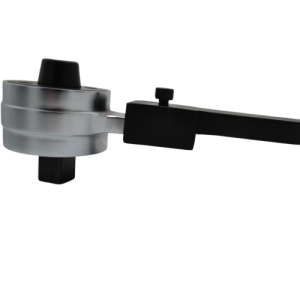
The Youba 1:3.3 torque multiplier for 1000 Nm bolting provides a concrete configuration for project review. The product page lists alloy-steel construction, a nominal 3.3:1 ratio, 1/2-inch input drive, 3/4-inch output drive, 1000 Nm maximum output, ±5% ratio accuracy, 284 mm length and 1.35 kg weight. It also states that two reaction arms are optional.
These values define the product configuration; the project still needs to confirm that the input wrench, socket, reaction point and operating envelope fit the actual bolt. The buyer should ask which reaction arm is quoted, whether the input tool and socket are included, which direction and operating method are approved, and what test evidence accompanies the order.
A supplier offering an alternative ratio, drive or reaction arm should mark the deviation explicitly. Comparable quotations need the same target torque and accessory scope.
What Can Go Wrong With an Incomplete RFQ?
Wrong input wrench range
The nominal ratio is correct, but the calculated input point is outside the selected wrench’s suitable or verified range.
Wrong square drive
Procurement discovers after delivery that an adapter is required between the input wrench, multiplier or socket. The added interface was never reviewed.
Reaction arm cannot seat
The socket reaches the fastener, but the arm cannot make stable contact because of a flange, guard or adjacent component.
Maximum output becomes the working assumption
The order says “1000 Nm multiplier,” but the actual joint target and required input settings are absent. Operators are left to interpret the application.
Nominal ratio is treated as exact
The buyer divides the target by 3.3 and ignores the published ratio accuracy, input-tool performance and verification requirement.
What Evidence Should Support Approval?
Evidence should match the project risk and purchasing contract. Ask for a confirmed datasheet covering the exact model, ratio, drives, maximum output, dimensions, weight, reaction-arm option and approved direction or operating method. Define what inspection or performance record is required and whether the complete system will be verified by the supplier, buyer or an approved laboratory.
If a sample is practical, evaluate assembly fit before bulk approval. The trial should use the proposed input wrench, interfaces, socket and reaction arm on a representative installation. Record clearance, reaction stability, operator access and the approved input-setting method. A successful fit trial does not replace documentation, and documentation does not replace a fit check where the envelope is uncertain.
What Should a Torque Multiplier RFQ Include?
- Fastener and application: joint type, fastener size and use case.
- Required output torque: each target value and unit.
- Tightening direction: required operating direction and method.
- Multiplier ratio: requested ratio or performance objective.
- Input wrench: type, model, range and accuracy/verification scope.
- Input drive: proposed square-drive interface.
- Output drive: required square drive.
- Socket: fastener size, drive, rating and whether it is included.
- Clearance: fastener location and full installation envelope.
- Reaction surface: location, direction and supporting dimensions.
- Reaction arm: required geometry and included option.
- Verification: method, acceptance rule and documentation.
- Quantity and packaging: tools, accessories, cases and spares.
- Destination: delivery location and commercial requirements.
- Included accessories: input tool, socket, adapters and reaction arms.
- Deviations: every difference from the requested setup.
Submit the specification and installation drawing through the Youba torque-tool RFQ form. Require the supplier to return Confirmed, Deviation, Alternative or Buyer Input Required against every item. Approval should cover the complete torque-transfer system, not just the 1000 Nm number printed in the product name.
Frequently Asked Questions
Does a 1000 Nm maximum output mean the multiplier should always be used at 1000 Nm?
No. Maximum output is a rating boundary. The project should define the actual target, normal operating point, approved input setting and verification basis.
Can buyers calculate input torque by dividing output by 3.3?
That calculation provides a nominal starting point. The final approved method must consider the multiplier’s ratio accuracy, input-wrench performance and the required system verification.
Why must the reaction arm be specified before ordering?
It must transfer reaction torque to a stable contact point. Geometry, direction and nearby obstructions determine whether the tool can be used safely and correctly.
Is ±5% ratio accuracy the same as ±5% final bolt preload?
No. Ratio accuracy applies to the multiplier. Final torque and preload depend on the complete tool system, fastening procedure, joint and friction conditions.
Feature Product
-
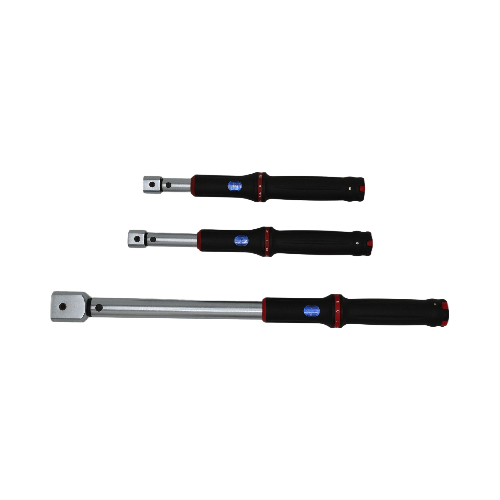 XS Series Interchangeable Head Window Style Cli...
TENGTUO ELECTRONIC TECHNOLOGY Item NO...
-
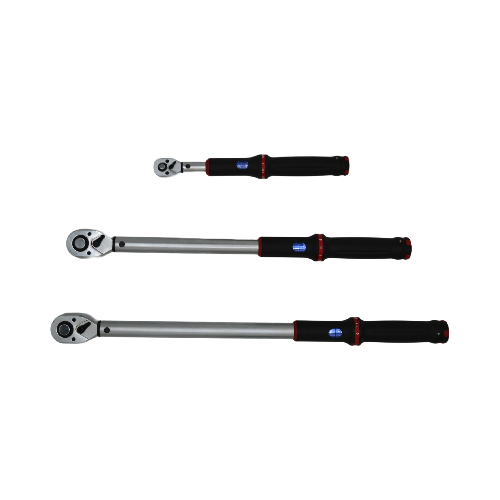 XS Series Window Style Click Torque Wrench
TENGTUO ELECTRONIC TECHNOLOGY Item NO...
-
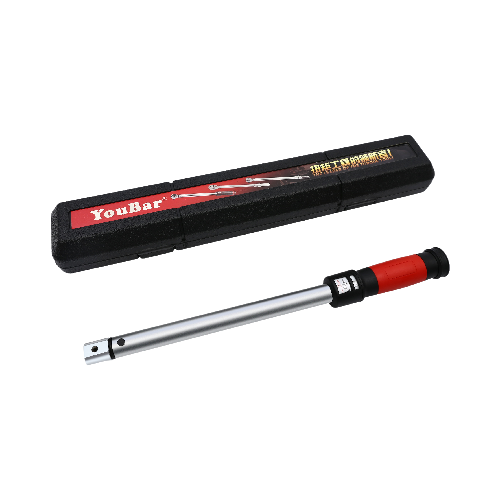 SL Series Interchangeable Head Window Style Cli...
TENGTUO ELECTRONIC TECHNOLOGY item NO...